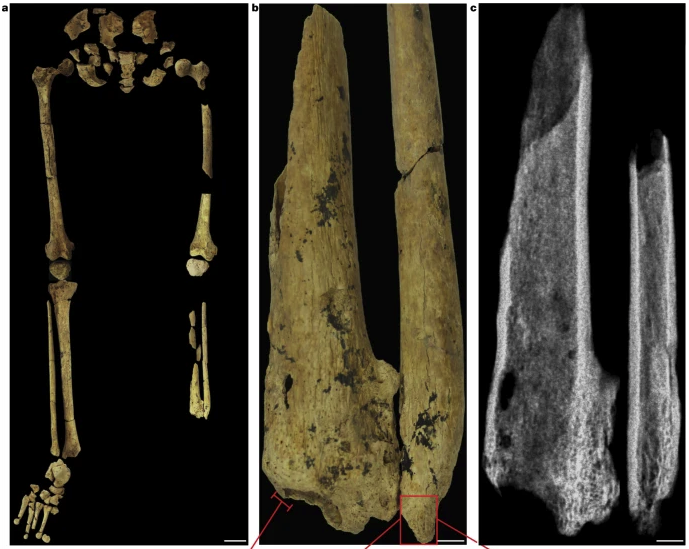
The oldest-known surgery is a leg amputation performed on a child 31,000 years ago on the island of Borneo (see image below).1 Before that discovery, the oldest known surgery was believed to be trepanation, the practice of drilling a hole the skull that dates back to at least 6,500 BCE.2
Since then, we’ve seen an evolution of surgery that has turned saws and hammers into human-assisted robots, and a small number of unevenly-trained practitioners in the 1800s into the current global surgeon workforce of over 1.1 million.3 So, how did surgery get from there, to here, in the present moment?
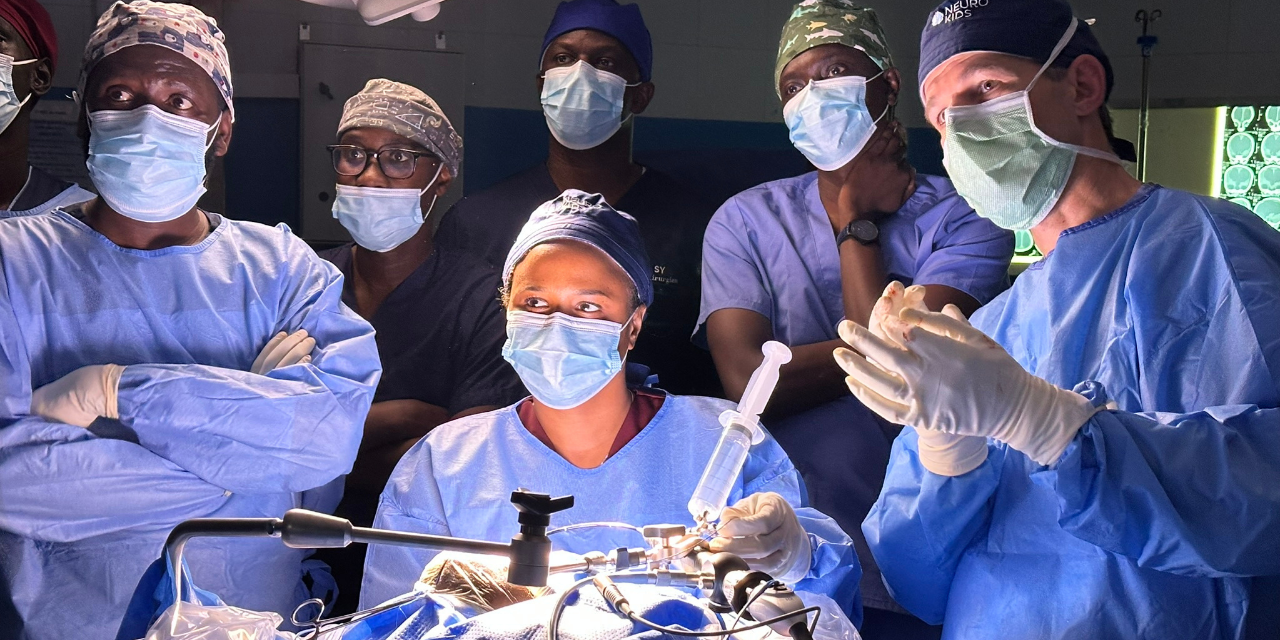
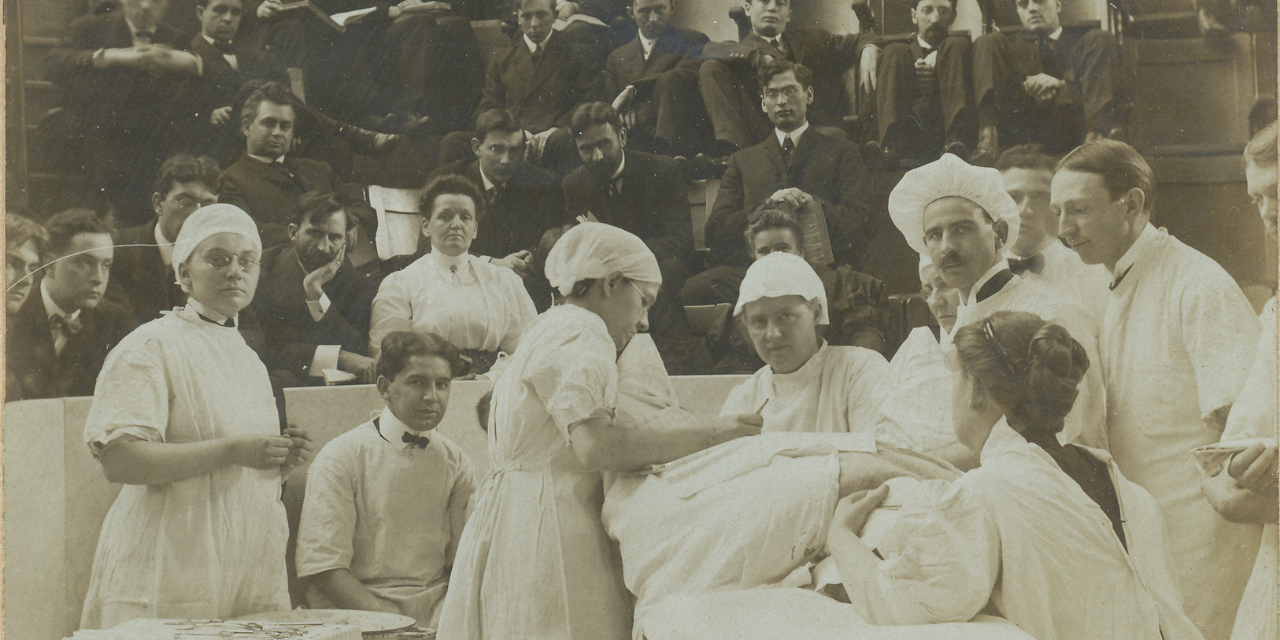
Simple: someone knew what they were doing, and someone else wanted to learn. The learner stood next to the expert and watched. Until the next person needed to learn, and the next. One by one by one.
That single constraint, where one can only learn a skill by being in the physical proximity of its master, has persisted for centuries and outlasted many other features of surgery.
Anesthesia arrived and made more surgery possible. Antiseptic technique arrived and made it safer. Imaging, laparoscopy, and robotics each transformed what a surgeon could do inside a human body. But none of them touched on a deeper problem, which is how efficiently a surgeon’s judgement and knowledge get passed from one person to the next.
Unfortunately, that hasn’t changed much since antiquity.
A history of tools or teaching?
What’s the problem here?
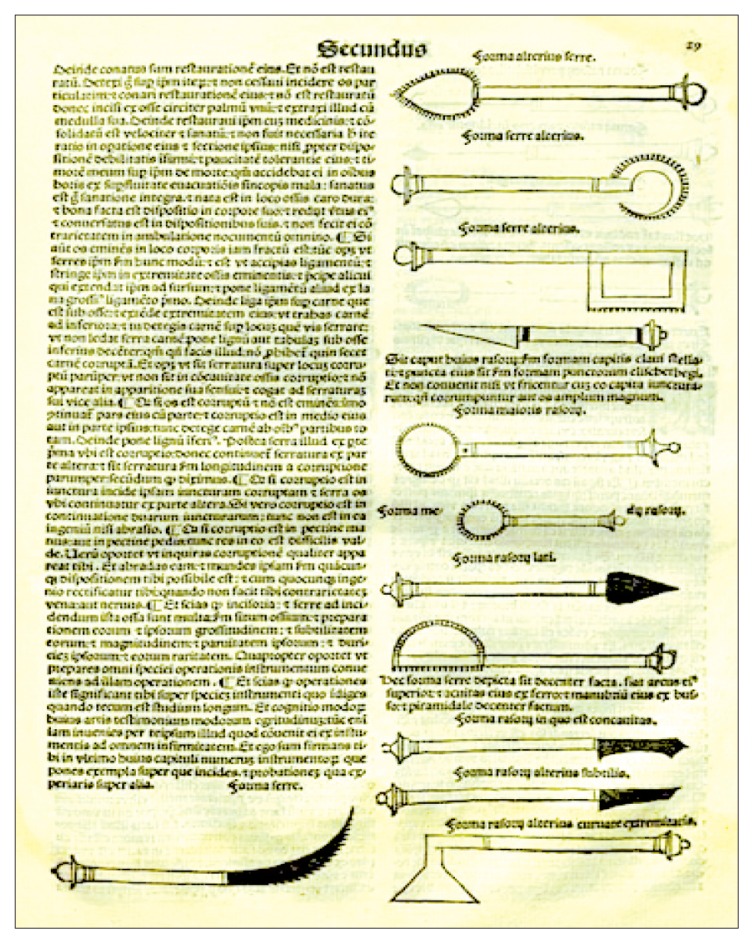
One of the first real surgical encyclopedias was compiled by Abu al-Qasim al Zahrawi around the year 1000, and catalogued instruments and procedures with immense precision for that time period.4 However, the knowledge inside it still had to be transmitted from person to person to become skill.
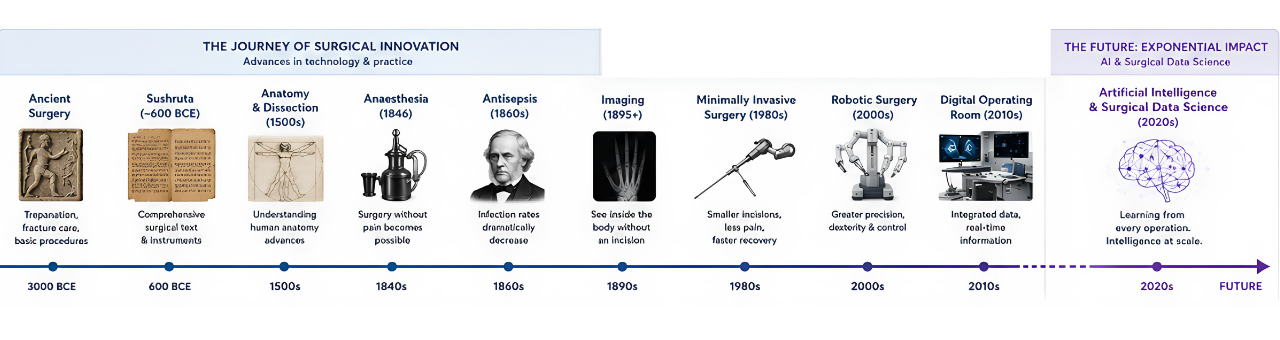
The past 500 years has been a story of surgery becoming safer, more precise, and farther-reaching, with each new development expanding what surgeons could achieve: Ambroise Pare’s rediscovery of ligatures in the 16th century improved bleeding control; ether and chloroform brought effective anesthesia in the 1800s; Joseph Lister’s germ theory shaped the standardization of antiseptic technique; and surgical microscopes, laparoscopes, and robot-assisted procedures have unlocked unprecedented surgical precision and recovery.5,6,7
But it is important to distinguish safety from surgical expertise, which is notoriously difficult to spread in the confines of the current “apprenticeship model”. It has worked in the sense that it has produced generations of extraordinary surgeons. But it only works where a master surgeon, a scarce resource for the majority of the planet, happens to already be.
The scale of the cost
Roughly two thirds of humanity lacks access to safe, timely, affordable surgical and anesthesia care.8 Five billion people. Treatable, common conditions like appendicitis, obstructed labor, and open fractures all lead to an estimated 18.6 million preventable deaths every year.8 That is more than the annual death toll from HIV/AIDS, malaria, and tuberculosis – three diseases that dominate global health funding and public attention – combined.
Closing the gap one apprentice at a time is simply not enough and cannot continue. Estimates suggest that the world needs over a million additional surgeons, anesthesiologists, and obstetricians by 2030 just to meet existing needs.8 The apprenticeship model will not get us there.
What’s changed?
This is the genuinely novel part of the story. What once required standing in the same room to acquire – a master surgeon’s judgement – can now be captured, structured, and shared as data.
Every laparoscopic and robot-assisted procedure generates video. That video contains the surgical phases, instrument choices, moments of action, hesitation, and correction that separate an expert from a novice. All of which only used to exist inside one surgeon’s head and hands, and would be lost forever after the operation was over.
Modern computer vision can now recognize surgical phases, anatomical structures, and efficiency metrics from that footage with real accuracy. It extracts data far beyond the human eye, giving us the opportunity to investigate solutions to the problems we didn’t know existed before. This expansion of the depth and breadth of knowledge available will push the field of surgery forward in ways we can’t even comprehend yet.
For the first time in history, we have technology that can turn the tacit knowledge of surgery into something you can store, study, and send anywhere in the world.
We are transitioning from unidirectional to multidirectional knowledge transfer; from surgical texts and experts to a collaborative teaching tool for a thousand surgeons who were never in the room. More surgeons with access to more training means more surgeons trained in more procedures, which means more surgery is available, which means better chances for patients. Anywhere and everywhere.

What’s next
We are at the point in this thousands-of-years-long story where the constraint is whether the world’s surgical knowledge can be organized, shared, and put to work. It is not a problem that any single hospital, company, or government can solve alone. It takes surgeons willing to contribute their expertise and data, institutions willing to partner on infrastructure, countries willing to adopt what is already working elsewhere, and funders willing to treat this as the soundest investment in global health they could make.
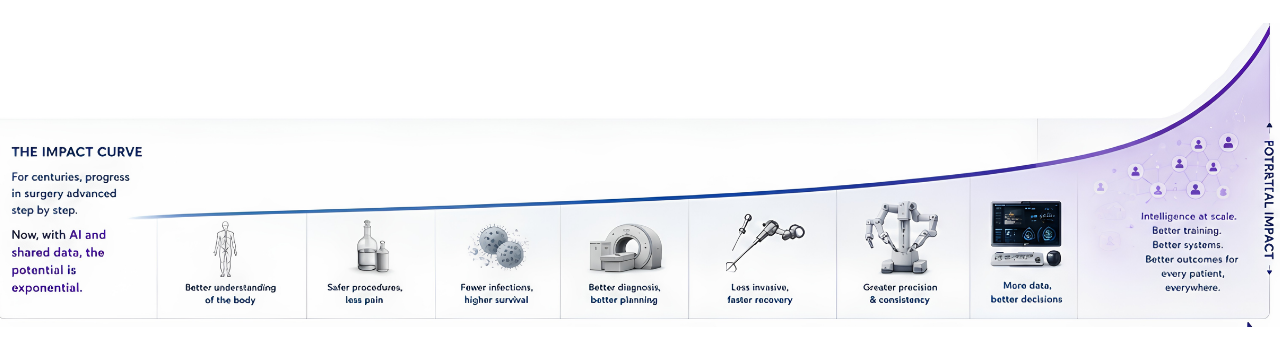
Cameras changed what a surgeon’s hands could do. Data can change who gets to learn from the best hands in the world. This is the wound Surgical Data Science Collective exists to heal.
We are always looking for collaborators. Please reach out to info@surgicalvideo.io if you:
- Want to answer a research question
- Want to scale a surgical education program
- Are a funder looking to get involved
Or you can simply set up your free Surgical Video Platform (SVP) account here.
Coming soon: A sneak peek into the new Surgical Metrics Scoring System (SMSS) live on SVP.
1. Maloney TR, Dilkes-Hall IE, Vlok M, Oktaviana AA, Setiawan P, Priyatno AA, et al. Surgical amputation of a limb 31,000 years ago in Borneo. Nature. 2022 Sept 7;609(7927):547–51. doi:10.1038/s41586-022-05160-8. https://doi.org/10.1038/s41586-022-05160-8
2. Arani M, Fakharian E, Sarbandi F. Ancient legacy of cranial surgery. Archives of Trauma Research. 2012 Aug 23;1(2):72–4. doi:10.5812/atr.6556. https://doi.org/10.5812/atr.6556
3. Diehl TM, Soto E, Laryea JA, Zafar SN. Surgery as a global health need. Clinics in Colon and Rectal Surgery. 2022 Sept;35(05):362–70. doi:10.1055/s-0042-1746185. https://pmc.ncbi.nlm.nih.gov/articles/PMC9470290/
4. Amr SS, Tbakhi A. Abu Al Qasim Al Zahrawi (Albucasis): Pioneer of modern surgery. Annals of Saudi Medicine. 2007 May;27(3):220–1. doi:10.5144/0256-4947.2007.220. https://pmc.ncbi.nlm.nih.gov/articles/PMC6077085/
5. Hernigou P. Ambroise Paré’s Life (1510–1590): Part I. International Orthopaedics. 2013 Feb 3;37(3):543–7. doi:10.1007/s00264-013-1797-5. https://pmc.ncbi.nlm.nih.gov/articles/PMC3580102/
6. Chaturvedi R, Gogna R. Ether day: An intriguing history. Medical Journal Armed Forces India. 2011 Oct;67(4):306–8. doi:10.1016/s0377-1237(11)60098-1. https://pmc.ncbi.nlm.nih.gov/articles/PMC4920664/
7. Michaleas SN, Laios K, Charalabopoulos A, Samonis G, Karamanou M. Joseph Lister (1827-1912): A pioneer of antiseptic surgery. Cureus. 2022 Dec 21; doi:10.7759/cureus.32777. https://pmc.ncbi.nlm.nih.gov/articles/PMC9854334/
8. Nepogodiev D, Picciochi M, Ademuyiwa A, Adisa A, Agbeko AE, Aguilera M-L, et al. Surgical health policy 2025–35: Strengthening essential services for tomorrow’s needs. The Lancet. 2025 Aug;406(10505):860–80. doi:10.1016/s0140-6736(25)00985-7. https://www.thelancet.com/journals/lancet/article/PIIS0140-6736(25)00985-7/abstract