In Uganda, a child with untreated hydrocephalus too often faces death or severe lifelong disability. There are not enough trained surgical teams to meet the need. Here’s how one neurosurgeon’s pioneering procedure revealed what global health has too often overlooked.
A mother’s journey
Aisha was 20 and expecting her first child while managing hypertension. She attended her antenatal appointments regularly, and on May 2, 2025, she delivered her son, Onore, by C-section at Kawempe National Referral Hospital in Uganda. Shortly after birth, Onore was diagnosed with hydrocephalus – a buildup of cerebrospinal fluid in the brain that raises pressure inside the skull and, without timely treatment, leads to brain injury, disability, or death.
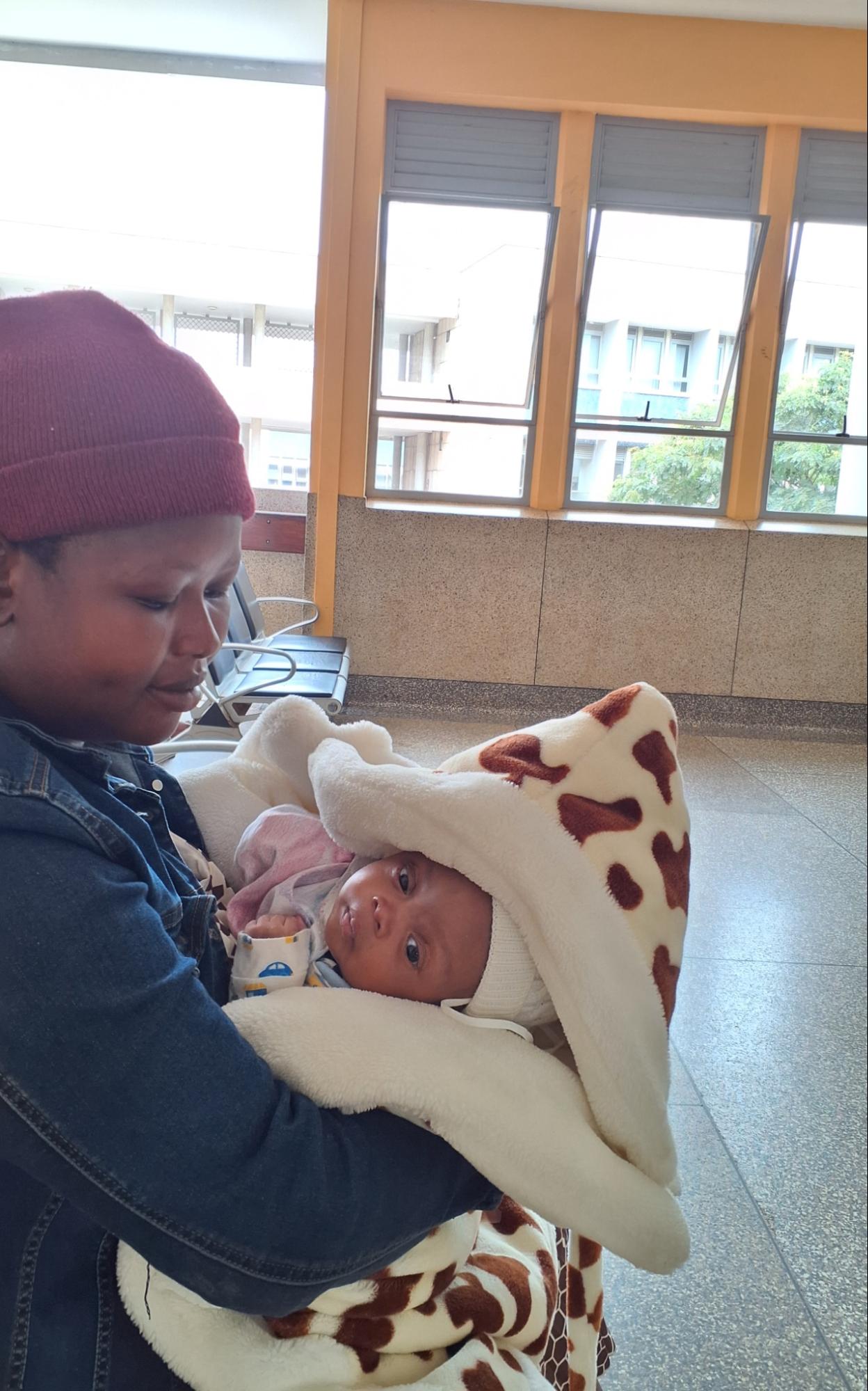
Two days later, once Aisha was medically stable, the family was referred to Mulago National Referral Hospital for specialized care. However, Aisha and her husband, Stephano, could not make the journey until they had found the money to get there. Both parents worked in the local market and were fortunate to secure a loan through their business savings cooperative before bringing Onore to Mulago.
For many families, this kind of journey begins long before a referral is made. A mother may watch her baby’s head continue to grow and responsiveness begin to fade while moving between health facilities in search of an explanation. Sadly, hydrocephalus is often poorly recognized within communities, and many families are told to simply wait and see. All the while rising pressure keeps damaging their child’s developing brain.
When a referral finally comes, the nearest hospital with a trained neurosurgeon may be hours away or in another district. Families must find money for transportation, food, lodging, diagnostic tests, and medical supplies while also losing income and arranging care for children left at home. Some borrow money, sell possessions, or delay the journey while gathering the funds they need.
Limited access to accurate medical information can create another burden. In some communities, misconceptions about curses or spiritual causes may intensify fear, stigma, and isolation at the time when families most need support.
After arriving at Mulago, Aisha and Stephano were counseled about hydrocephalus, their treatment options, the importance of follow-up, and Onore’s potential long-term needs. They also received direct contact information for the care team so they could stay in touch after returning home. Roughly two weeks later, Onore underwent ETV-CPC, a procedure pioneered in Uganda by Dr. Benjamin Warf, founder of NeuroKids. NeuroKids partners with locally led surgical teams around the world to expand access to care for children with hydrocephalus and spina bifida through training, equipment, clinical mentorship, family support, and stronger systems of care. At Mulago, Onore’s procedure was performed by the local neurosurgical team supported through this partnership.
Hydrocephalus is treatable, and where timely, specialized care is readily available, children can survive and thrive. Yet across many parts of Africa, limited access to trained surgical teams and properly equipped hospitals means the condition still leads to preventable death and lifelong disability. It is also far from rare. In Uganda alone, an estimated 10,000 infants develop hydrocephalus each year, with roughly 60% of East African cases tracking back to neonatal infection rather than genetics.1
The cost of inaction places an immense burden on African countries, with the estimated annual economic burden of untreated infant hydrocephalus ranging from $1.4 to $56 billion per year.2 The benefit-to-cost ratio for treatment exceeds 7:1, and these figures prove that treating this condition is not only the right thing to do, but also one of the best returns on investment in global health.2
An unlikely procedure born of necessity
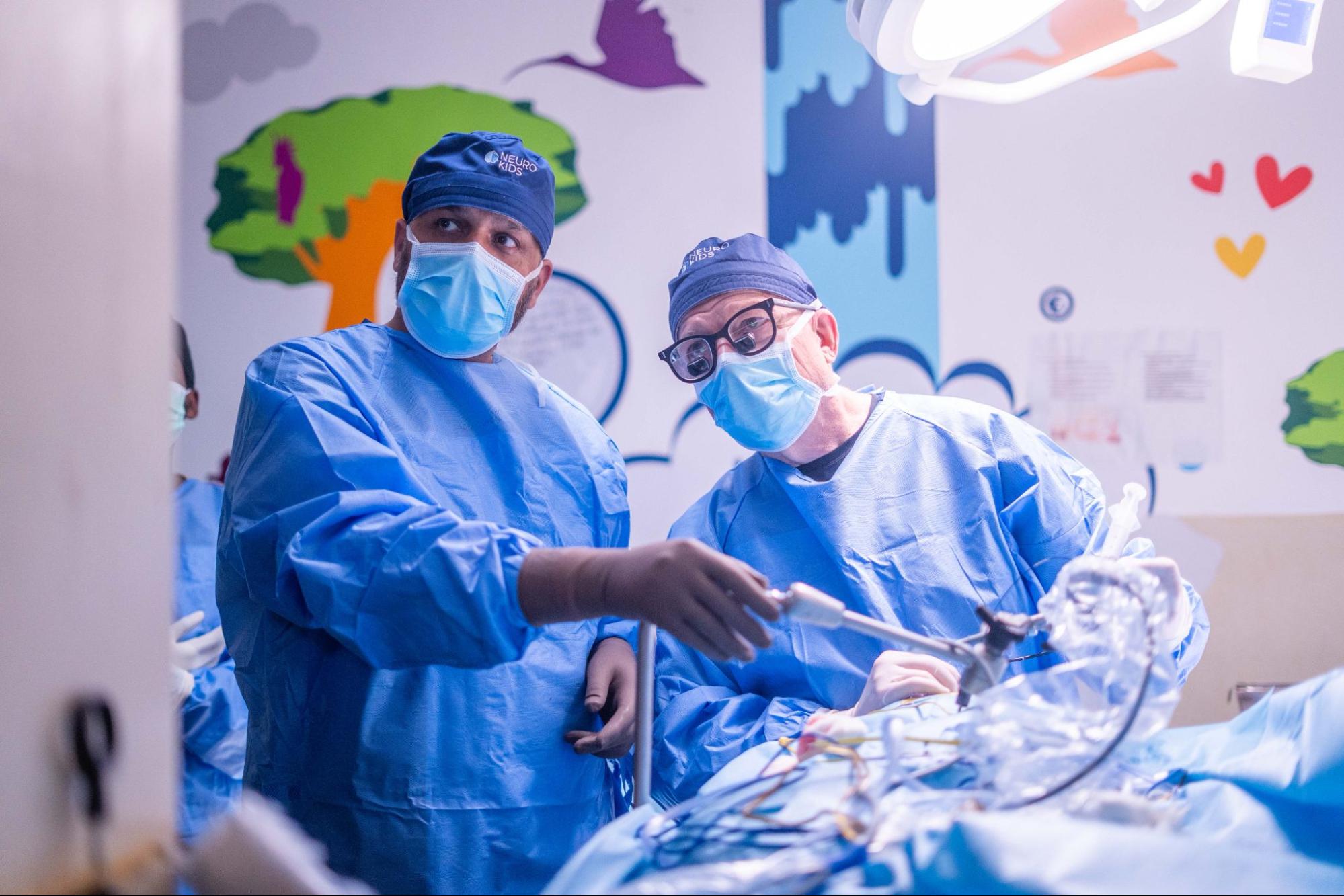
In the year 2000, Dr. Benjamin Warf moved to Uganda to become founding Medical Director of CURE Children’s Hospital which was, at the time, the only pediatric neurosurgery hospital in East Africa. There, he encountered an overwhelming number of children with untreated hydrocephalus and saw the particular risks of relying on shunts in places where families could not readily reach emergency neurosurgical care. A shunt failure is a life-threatening emergency that requires urgent surgery, so for families living hours from a trained surgical team, that complication can be fatal.
Faced with this reality, Dr. Warf combined two existing endoscopic techniques into a single procedure: endoscopic third ventriculostomy with choroid plexus cauterization or ETV-CPC. The result was a breakthrough: many more babies could be treated successfully without relying on an implanted shunt that might fail later and require emergency surgery.
It’s worth taking a pause to consider what this means: a surgical innovation born out of necessity in Uganda, developed in response to the realities facing families far from emergency neurosurgical care, is now recognized as a critical approach to treating infant hydrocephalus. It challenges the assumption that the Global North is the main exporter of surgical solutions.
The bigger blind spot
Why should a child’s chance of surviving hydrocephalus depend so heavily on where they are born? The treatment exists, but too often a trained surgical team and properly equipped hospital are not within reach.
Dr. Olufemi “Femi” Bankole was one of the first neurosurgeons Dr. Warf trained in ETV-CPC. They met at CURE Children’s Hospital of Uganda in Mbale in 2006. He has since treated thousands of children in and around Lagos, Nigeria, becoming one of Africa’s leading experts in the procedure, and has gone on to train and mentor surgeons across Nigeria, Côte d'Ivoire, Bangladesh, and Morocco.
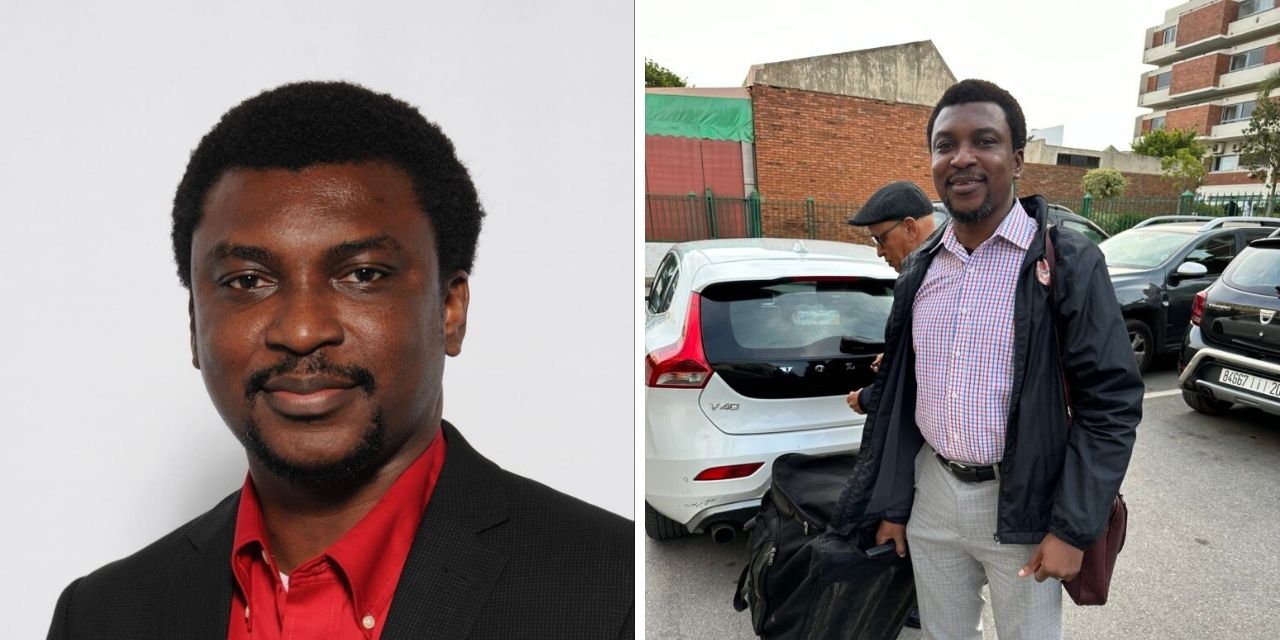
Dr. Bankole has seen firsthand how often children reach specialized care too late: “While I was training to be a neurosurgeon, most of the children with hydrocephalus I saw either presented late or received care late. For me to be able to intervene early and see the children grow up healthy and develop normally is one of the highlights of my practice.”
That delay in care is a structural reality for many families. A recent systematic review in Journal of Neurosurgery found just
1,974 neurosurgeons serve roughly 1.3 billion people across Africa – about one neurosurgeon for every 679,000 people.3
Africa carries a significant share of the world’s neurosurgical disease burden but only has about 1% of the global neurosurgical workforce. Nearly two-thirds of the continent’s neurosurgeons are concentrated in North Africa, leaving the rest with even more severe shortages.3
For Dr. Bankole, ETV-CPC changed what his practice could offer, giving appropriately selected children an opportunity to avoid lifelong shunt dependence: “It really is about giving these children the care and attention they deserve and require to live healthy and productive lives, using scientifically proven treatment models that minimize the complications associated with the traditional treatment methods.”
He described what training with Dr. Warf, and with NeuroKids since, has meant to his own trajectory: “Beyond the skills I learned, I saw compassion, care and dedication at work, and that inspired me… NeuroKids is extremely focused in its mission to provide care for children with hydrocephalus through a unique model of skills transfer and support. There are hardly ANY organizations looking at this global disease and its burden on the individual, families, society, and health systems.”
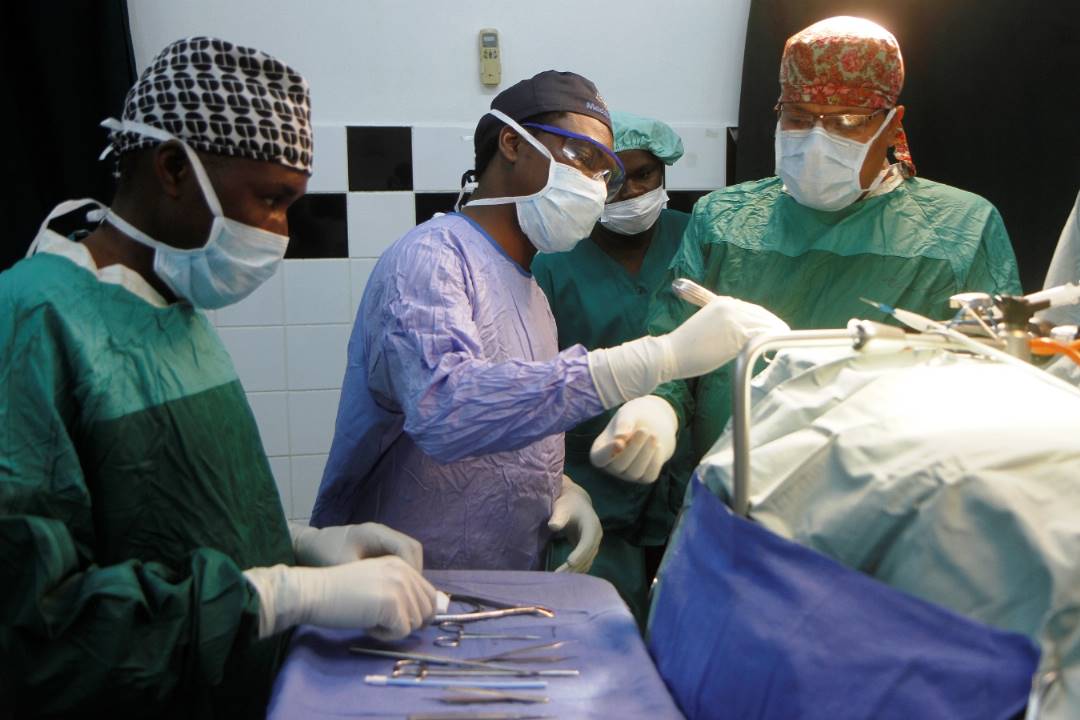
This is an individual story sitting inside a significantly larger gap. The Lancet Commission on Global Surgery estimates that 5 billion people lack access to safe, affordable surgical care when needed, with an unmet need of 143 million surgical procedures each year.4 Progress against these numbers has been slow, and in some cases gone backwards.5
Surgery, and neurosurgery no less, remains persistently under-emphasized in global health conversations and in global health financing. Surgery is largely absent from the architecture of how global health funds are allocated – this must change. It is imperative that we advance training where surgical need is greatest with both committed and sustained funding.
This ask also goes beyond training more surgeons or funding more operations. Meaningful investment means supporting the full, locally led care pathway, from early identification and referral to skilled care teams, reliable equipment, follow-up, family support, mentorship, and data systems.
That is why NeuroKids has partnered with Surgical Data Science Collective (SDSC) to build artificial intelligence (AI)-powered tools that challenge the traditional surgical education model, and let surgeons like Dr. Bankole scale their expertise without the usual constraints of in-person mentorship.
What happened to Onore
Onore’s initial recovery was encouraging, and within five days of his ETV-CPC his parents reported that he appeared more alert and cried less frequently. After which, he was discharged home. Aisha remained committed to bringing him to his follow-up appointments, and Stephano described the team's care: “They love our son as if he were theirs.”
How many children did not make it to a trained surgeon this week? This is not a tragedy of science. Hydrocephalus is treatable… The tragedy is that too little has been invested in bringing that care within reach – in skilled teams, equipment, mentorship, and the health systems children depend on.
Surgery must be treated as a global health imperative. Solutions pioneered in Africa can help transform care for children worldwide.
Visit the NeuroKids booth and connect with SDSC at ISPN this September to learn more about our joint efforts to train more surgical leaders across the continent.
Coming next: In Blog Two, we look at how AI can reinforce this locally led model. The collaboration between NeuroKids and SDSC is rewriting how surgeons learn, how surgical outcomes are evaluated, and how innovation flows from the Global South to the Global North.
1. https://neurokids.org/where-we-work/uganda/
2. Warf BC, Alkire BC, Bhai S, Hughes C, Schiff SJ, Vincent JR, et al. Costs and benefits of neurosurgical intervention for infant hydrocephalus in sub-saharan africa. Journal of Neurosurgery: Pediatrics. 2011 Nov;8(5):509–21. doi:10.3171/2011.8.peds11163. https://doi.org/10.3171/2011.8.PEDS11163
3. Ukachukwu A-EK, Still ME, Seas A, von Isenburg M, Fieggen G, Malomo AO, et al. Meeting African neurosurgical workforce requirements: A 2030 systematic review and projection. Journal of Neurosurgery. 2023 Apr 1;138(4):1102–13. doi:10.3171/2022.2.jns211984. https://thejns.org/view/journals/j-neurosurg/138/4/article-p1102.xml
4. Meara JG, Leather AJ, Hagander L, Alkire BC, Alonso N, Ameh EA, et al. Global surgery 2030: Evidence and solutions for achieving health, Welfare, and economic development. The Lancet. 2015 Aug;386(9993):569–624. doi:10.1016/s0140-6736(15)60160-x. https://www.thelancet.com/journals/lancet/article/PIIS0140-6736(15)60160-X/fulltext
5. Nepogodiev D, Picciochi M, Ademuyiwa A, Adisa A, Agbeko AE, Aguilera M-L, et al. Surgical health policy 2025–35: Strengthening essential services for tomorrow’s needs. The Lancet. 2025 Aug;406(10505):860–80. doi:10.1016/s0140-6736(25)00985-7. https://www.thelancet.com/journals/lancet/article/PIIS0140-6736(25)00985-7/abstract