Across the world, clinicians and researchers are constantly developing ideas that could improve surgical outcomes everywhere. But despite the possible impact for patients, how often are these ideas nurtured by a source of near-unlimited data, vast technical expertise, and an abundance of compute? The answer is nearly never!
Surgical Data Science Collective (SDSC) is home to the largest independent repository of surgical video in the world, and it sits us on a powerful foundation for innovation and democracy within the surgical community. The potential is magnificent and could have repercussions for every current and future surgical patient globally if it is accessible in the ways that matter most.
We are no strangers to the research barriers that rear their ugly heads time and time again: limited access to high-quality data, expensive infrastructure, and the complexity of setting up machine learning (ML) environments. Even when the data does exist, it’s not always possible to scale its use meaningfully.
With this in mind, a team of final-year Software Engineering students from the University of Waterloo, Ontario, Canada stepped in with a phenomenal idea.
Introducing… SDSC Developer Central
For their capstone design project, a group of four students – Alex Chan, Ayla Khan, Melanie Foltak, and Valerie Fernandes – partnered with SDSC to tackle a deceptively simple question: how can we make artificial intelligence (AI) and surgical data tools accessible to anyone with a research idea?
Their answer: SDSC Developer Central – a secure, cloud-based research platform designed to remove the barriers that slow down surgical AI research.
Rather than building from scratch, the team worked strategically within SDSC’s existing Amazon Web Services (AWS) ecosystem – where our Surgical Video Platform (SVP) is hosted – and selected AWS SageMaker Unified Studio to host this new platform.

Surgical video and metadata already live within SVP, and AWS SageMaker provides a powerful, secure environment for ML.
The challenge was to connect these pieces into a seamless, user-friendly experience that enables researchers of all backgrounds to access data, run models, and experiment with ML workflows in a controlled, audited environment, without the cost of hosting on AWS.
SDSC Developer Central provides access to the same data users have permission to via their SVP account. When a user wants to run experiments, they move into SageMaker to launch projects and work within Jupyter coding notebooks.
Data security also remains constant and consistent with that of SVP. Surgical videos are never downloaded locally but instead stay within secure cloud-based references to ensure HIPAA compliance and protection of sensitive information at every step.
A platform designed for every kind of researcher
A key goal of the project was inclusivity, and so the platform is designed to support a wide range of users with different skill levels and resources.
The interns like to think about it “like a set of LEGO pieces. There are several user use cases (see table below) and this platform connects everything together so that each individual user can combine what they need with their personal resources to reach their specific goal.”
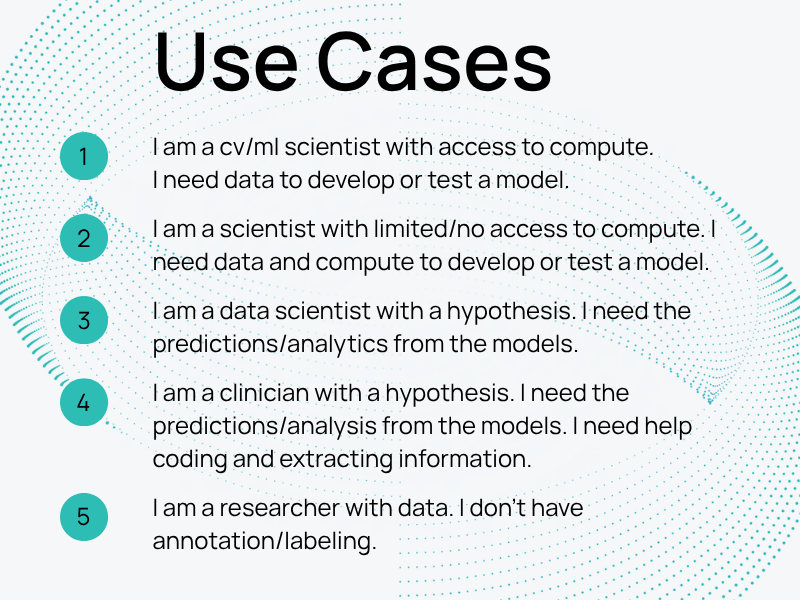
For non-technical researchers, the platform offers guided workflows and example code notebooks where most of the complexity is hidden. Users can input simple parameters like dataset names or model choices, and run experiments with minimal coding. In many cases, it’s as straightforward as editing a few variables and pressing “run.”
For ML practitioners, the platform provides the flexibility to go deeper with custom model integration, code modification, and scaled experiments using SDSC’s infrastructure.
For institutions with strict data governance policies, the platform offers a unique advantage. Researchers can leverage SDSC’s models and keep data entirely within their own controlled environment so that they can benefit from advanced AI tools without needing to share sensitive data externally.
In all cases, the platform removes a major barrier: the need to invest in expensive compute infrastructure or navigate complex setup processes. Instead, researchers can focus solely on their ideas.
Stepping towards democratized surgical AI research
By lowering the barriers to entry, SDSC Developer Central opens the door to a broader and more diverse research community; Students, underfunded institutions, and independent researchers can now access tools that were previously out of reach.
In a field where advancements have the potential to directly impact patient outcomes, the speed of innovation matters immensely. This platform makes research more accessible, equitable, and ultimately impactful.
The people behind the platform
While the technology itself is impressive, this project is particularly special because of the team behind it.
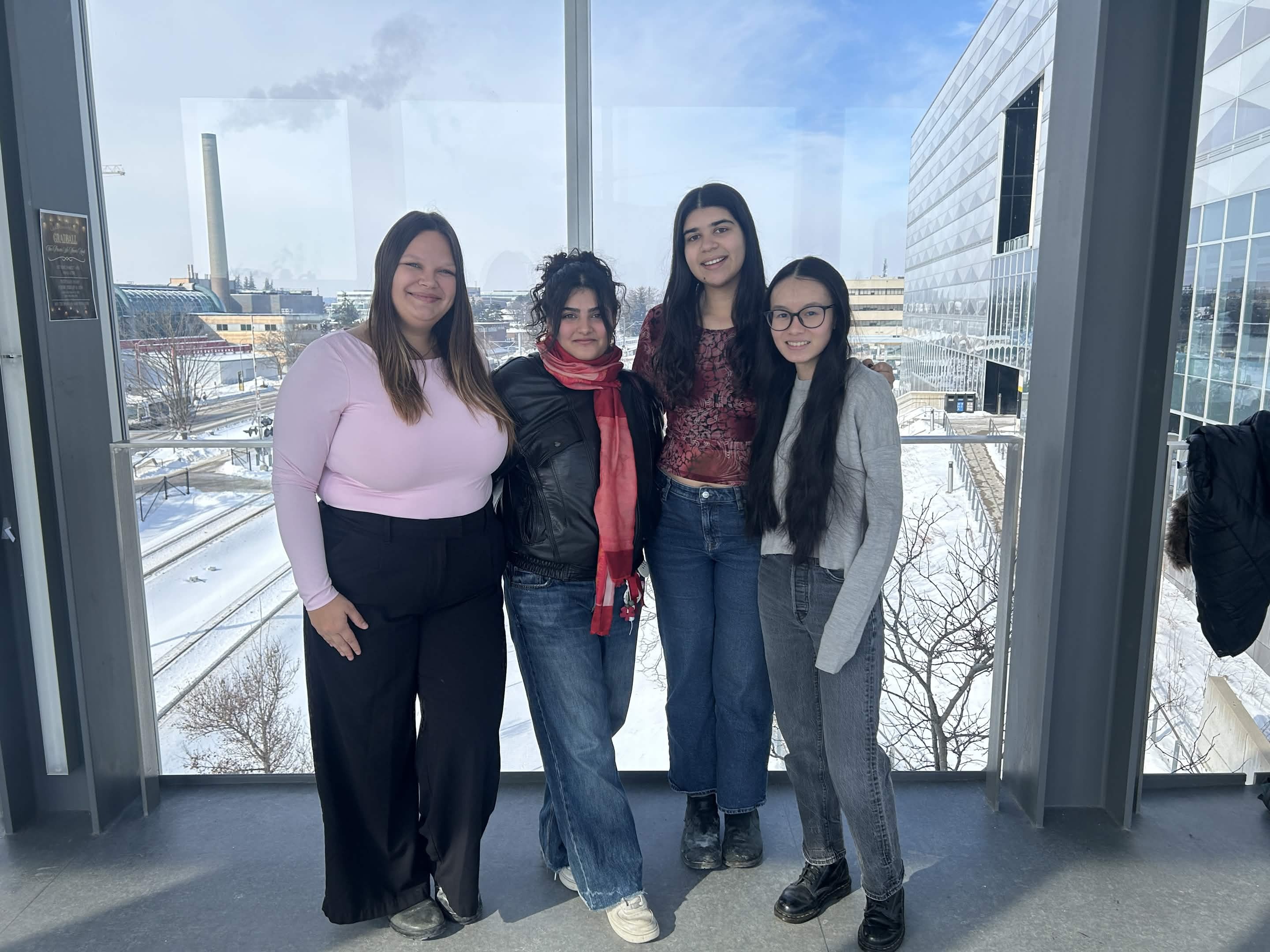
The students came to SDSC with an intent to work on something meaningful. Having spent years studying together and building their skills through internships, they brought both technical expertise and a strong sense of collaboration to the project. Through weekly check-ins and mentorship from Ahmed Amin, SDSC’s Head of Engineering, they navigated complex decisions around architecture, usability and security – gaining real-world experience that goes far beyond the classroom.
Perhaps most importantly, they had the opportunity to contribute to a platform that could have a tangible impact on healthcare. Upon reflection, they shared that one of the most rewarding aspects was knowing that their work could help enable research that improves surgical outcomes.
Looking ahead
SDSC Developer Central is already being explored by internal teams and early external users, with continued refinements focused on usability and accessibility. As the platform evolves, it has the potential to become a central hub for collaborative, global surgical AI research.
For SDSC, it also highlights the value of working with emerging talent. By partnering with students and giving them ownership over meaningful projects, the organization is helping to cultivate the next generation of engineers and researchers. Sometimes the best way to move a field forward is to open the door and let new ideas in.
We are actively looking for early beta testers to help fine-tune the platform. To get involved, please reach out to info@surgicalvideo.io.