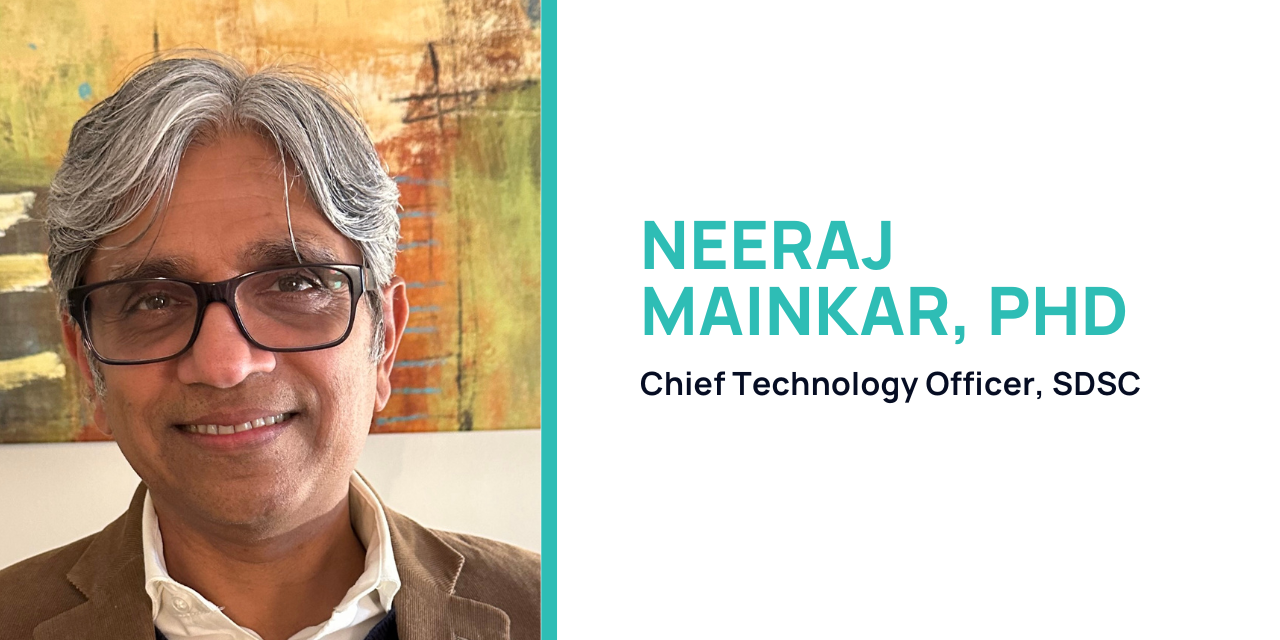
Surgical Data Science Collective (SDSC) is excited to welcome Neeraj Mainkar, PhD as our new Chief Technology Officer (CTO). With a career that has spanned deep technical leadership across technology in both the U.S. defense and healthcare spaces, Neeraj brings decades of experience building scalable, mission-driven innovations from concept to real-world impact.
This Q&A will explore Neeraj’s journey from physics to medical technology, why he joined SDSC’s mission, and how he envisions building world-class artificial intelligence (AI) and surgical video infrastructure to transform surgical education and patient outcomes.
Q: What inspired you to pick tech?
Physics and math were my favorite subjects at school. But after pursuing a bachelor’s degree, master's degree, and PhD in physics, I was increasingly drawn towards an applied field where I could use my technical talent. Theoretical and computational physics trains you to tackle a wide range of careers in engineering, computer science, or applied physics. So, after my PhD I joined my first startup – an organisation where I could apply my technical skills and see a benefit from it – protecting and saving lives. I fundamentally believed that technology can and should be used for the benefit of mankind. Science and technology have solved so many human problems in the last 150 years and so that is what draws me to do tech every day.
Q: Why did you make the jump into healthcare?
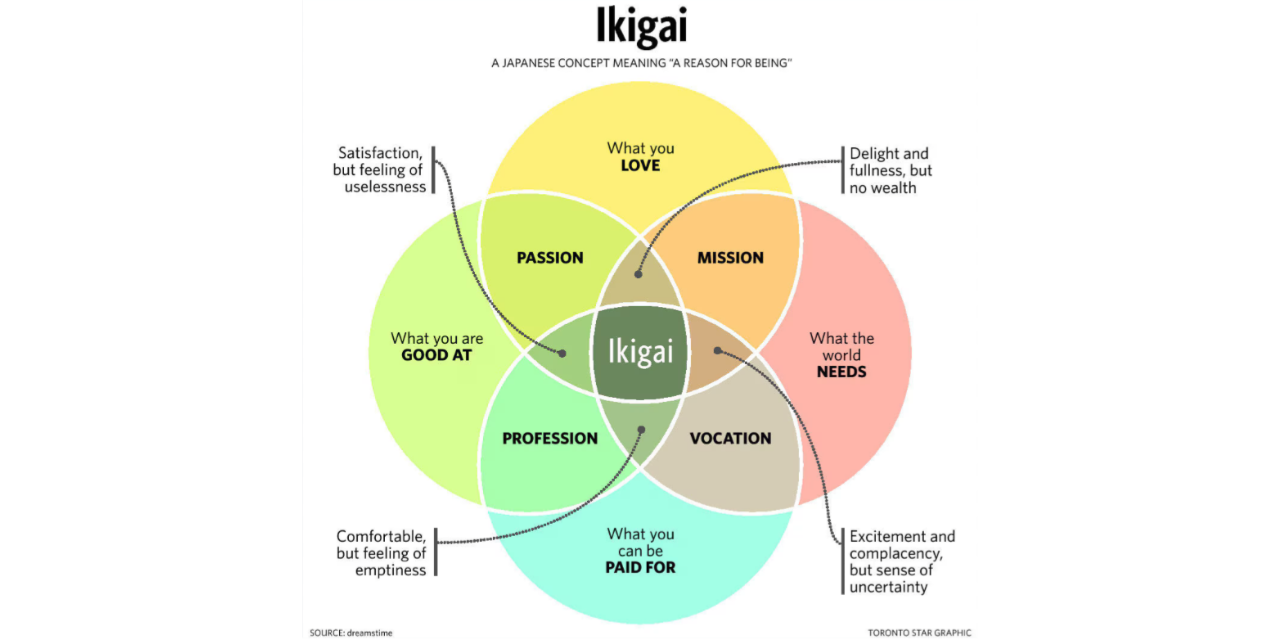
For the first 14 years of my post-PhD life, I was in defense & homeland security tech. And while noble, it brings a slightly different sort of satisfaction. At the end of those 14 years, I decided I wanted to apply my knowledge to something more directly beneficial to humankind. I’m a big believer in the Ikigai concept – a Japanese concept where a confluence of multiple factors intersect to ask important questions like: What are you good at? What does society need? And I felt like the medical technology field was the one where all those circles intersected really well. Then as I was thinking about this transition, I was approached by a medical device start-up in Philadelphia, and I jumped at the opportunity.
Q: What is your proudest career achievement to date?
My proudest moment was when we received FDA clearance for my first medical device startup in Philadelphia. The company was called Neuronetics and the device was called NeuroStar. It was the first FDA cleared device for the use of transcranial magnetic stimulation (TMS) for the treatment of depression. People suffering from depression can lead such miserable lives, so discovering TMS as a viable alternative for people who don’t respond to drug treatment was a huge breakthrough. It’s painless, noninvasive, and it can even work on pregnant women who can’t take drugs. It was so rewarding to see patients improve, and come back to the company saying “you changed my life, I’m still alive today thanks to my TMS treatment.” It was wonderful to see.
Q: How did you come to work at SDSC?
I’ve been familiar with SDSC since 2023, and even more so since 2024 when I met Dr. Donoho at the American Association of Neurological Surgeons (AANS) conference. I was giving a talk about AI in neurosurgery, and we connected at the event. So, when the recruiting team at SDSC approached me, I was already very interested in the work here. I was also familiar with Margaux Masson-Forsythe after watching her Ted Talk and consulting her book on active learning in my previous job. All of this came together and I thought, yes, absolutely!
Q: What about SDSC’s mission resonates with you most?
What resonates most with me about SDSC is that it is addressing one of the most fundamental gaps in surgery today: the lack of systematic feedback and learning at scale.
We are at a real inflection point. High-quality surgical video, advances in AI, and growing clinical insight are converging in a way that makes large-scale learning from surgery finally possible. SDSC is the only organization I’ve seen that is building this future with the right vision, the right platform, and the right tools.
SDSC is creating a scalable, device-agnostic, and globally deployable surgical learning system that is fully software- and AI-native. By building the entire end-to-end pipeline — from data ingestion and annotation, to AI-driven insight generation, to meaningful feedback — we enable learning from every surgery, not just a handful of cases.
Surgeons everywhere are deeply committed to improving patients’ lives, yet most operate with remarkably little feedback beyond their own experience. SDSC’s mission is to change that by allowing the field of surgery itself to learn collectively. That idea — learning from every procedure to elevate outcomes everywhere — is what truly sets SDSC apart.
Q: Would you say that part of our appeal is due to our non-profit structure?
Yes, 100%. The reason I was attracted to SDSC was this exact advantage. It automatically opens doors and makes it easier for surgeons to willingly share their data because they recognize that we are not out here to convert people’s personal health data into a profitable business. So the next step is doing this at scale by collaborating with bigger institutions, for example, we have already started this with Mayo Clinic.
Q: What is your role as CTO going to entail?
My role as CTO is to build the foundational AI infrastructure that makes large-scale surgical intelligence possible. That means creating a world-class platform for surgical video and multimodal data — from how it is collected and standardized, to how it is annotated, modeled, and ultimately translated into meaningful insights.
I often think of SDSC as playing a role similar to the Human Genome Project. Just as genomics required shared standards, common data representations, and scalable analysis pipelines, surgical AI needs the same kind of foundation. At SDSC, we are developing the ontologies, data standards, and AI pipelines that allow surgical data to be captured and analyzed consistently across institutions and across the world.
This work depends on close collaboration with surgeons, hospitals, and research institutions globally. SDSC’s mission is to lead the field by building these core standards and infrastructure so that surgical insights can be generated reliably, shared responsibly, and ultimately used to improve care everywhere.
Q: What qualities do you value most in the technical team?
Technical aptitude is obviously necessary in a technical team, but I value humility just as much or perhaps even a bit more than just technical aptitude. Open mindedness and a willingness to learn, to listen to and respect other people’s ideas are extremely crucial qualities in a technical team, because collaboration and teamwork are essential for success. Each person’s technical work influences and affects another person’s technical work, so having a collaborative and humble approach is extremely important for the cohesion of the technical team.
Q: What keeps you motivated?
What keeps me motivated is the knowledge that our work directly affects patients’ lives. Surgery is one of the most personal experiences people go through – nearly all of us have faced it ourselves or through someone we love – and we all understand how much outcomes matter.
That reality makes the work deeply meaningful. I can start each day knowing that what we build at SDSC has the potential to improve surgical care at scale, not in an abstract way, but in ways that truly matter to real people.
I often think of this through the lens of Ikigai. At SDSC, the work sits at the intersection of what we care about deeply, what we are good at, and what the world needs right now. That alignment is incredibly motivating – it’s what makes the effort worthwhile and the impact enduring.