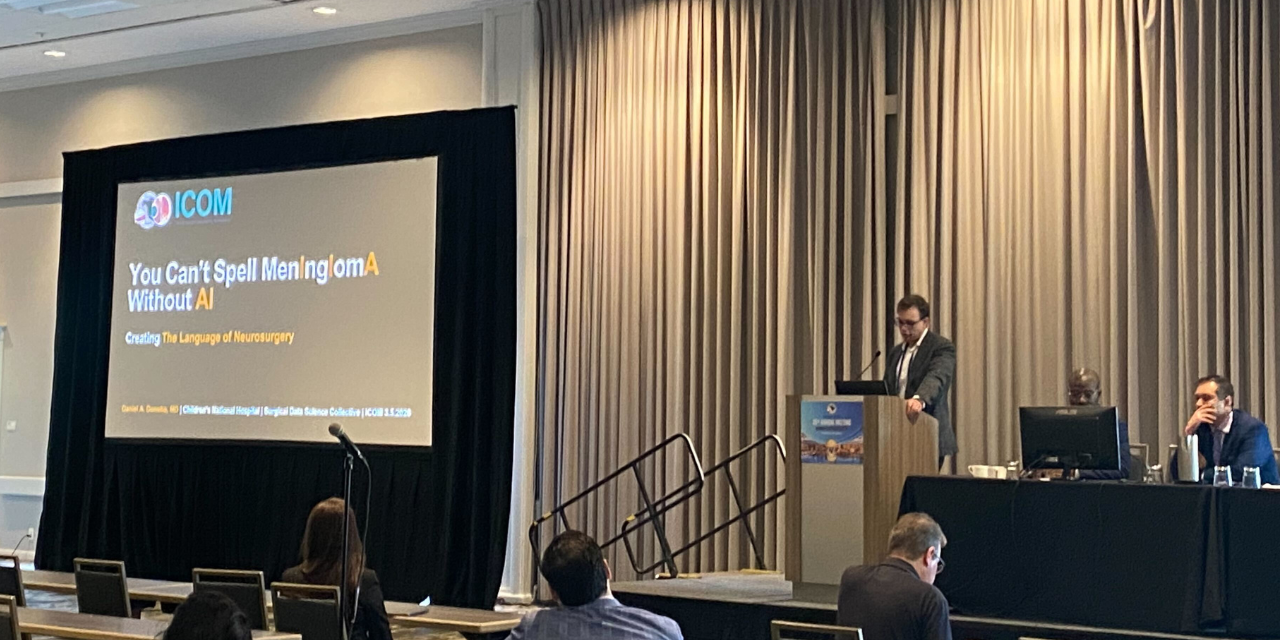
At Surgical Data Science Collective’s (SDSC) third official attendance of the North American Skull Base Society (NASBS) Annual Meeting, our Founder and President Dr. Daniel Donoho gave a forward-looking talk called “Can’t Spell MenIngIomA without AI” which addressed the uncomfortable idea that surgery has no writing system, and that there is a major problem of knowledge loss within the current structure of surgical education.
Why is most of our knowledge being lost?
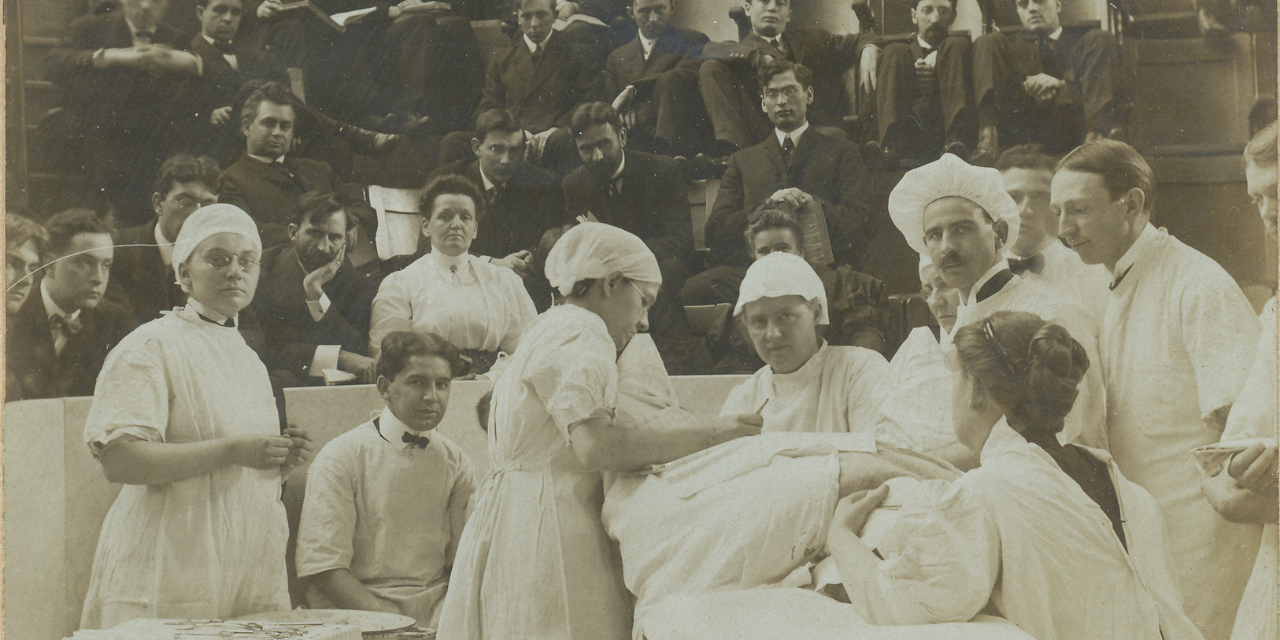
Throughout Dr. Donoho’s career, he has spent countless hours in training, whether that be studying the surgical diaries of Harvey Cushing or learning from a master surgeon during residency. But do those diaries truly capture and portray the realities of surgery? As a surgeon, can you say for certain that you have retained 100% of the knowledge that was passed down to you during your time as a mentee?
We must raise an important question:
As mentors and teachers train their final trainees, what happens to their accumulated knowledge?
.png)
Every surgeon can remember a case during training that went particularly well. A case that might’ve made you think “that’s what excellent surgery looks like.” You can probably remember the movements, decisions, and how well the operation flowed… but was that perfectly captured after the fact? It likely wasn’t, because that knowledge is rarely written down in a way that you or others can access.
It’s not in the operative note, the textbook, or the journal article. And eventually, your mentors are not there to step in and show you again. When this happens repeatedly – particularly with the world’s best surgeons and trainees – it is a failure of infrastructure.
The lack of structured intraoperative data means the study of surgery often relies on what is easiest to measure, rather than what matters most. Surgeons spend years studying post-operative risk factors, outcomes, surgical approaches, and volume as a proxy for quality; all extremely important, but don’t necessarily provide the most effective insight. It’s a bit like looking for your keys under a lamppost because that is where the light is.
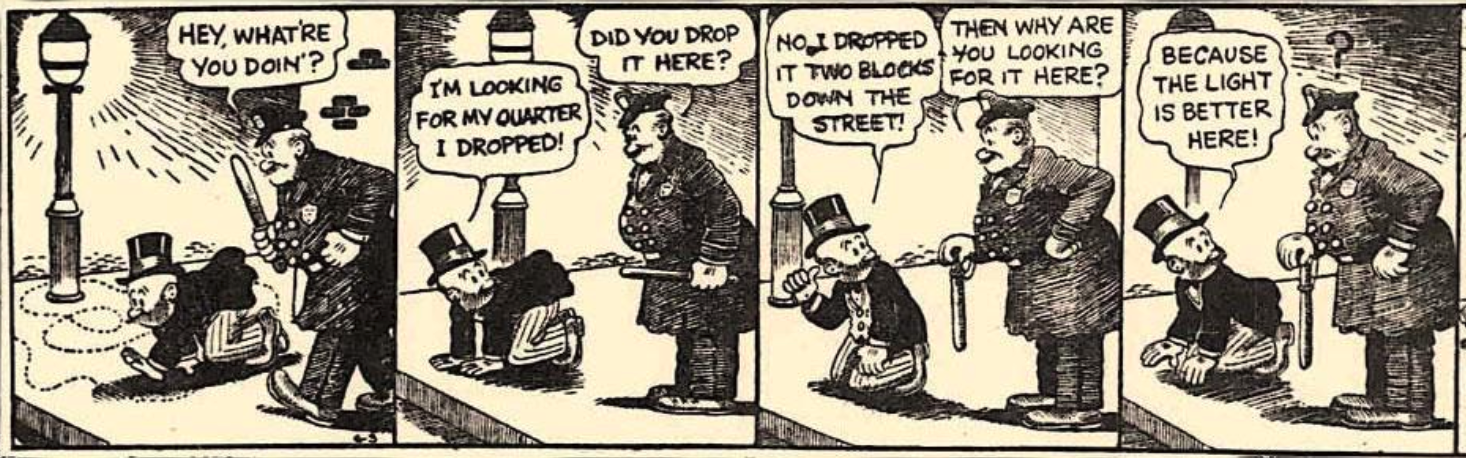
The actual performance of surgery within the operating room remains largely a black box. So, our job is to bring the light we need into the operating room, and make the actual act of surgery itself measurable, understandable, and improvable.
Every field that needs mastery builds notation
If you look across other skilled disciplines, e.g. music, mathematics, architecture, programming, you will find that they all developed notation – a way to record not just the outcome but the act itself. It allows for knowledge to be preserved while creating the conditions for people to iteratively build upon each other’s work. Once the conditions are set, new discoveries are easier to compare and the rate of innovation increases.
Surgery lacks this.
Surgical education is currently an oral tradition that loses knowledge in every transfer between hand to eye to hand. Knowledge dies entirely when a master retires.
If surgery is going to become legible, readable, and writable, we require a new language:
- An alphabet of atomic surgical movements
- A grammar of gestures
- A syntax of steps, phases, and workflows
.png)
If we build this sequentially, as a community, we will create an infrastructure that has the power to preserve knowledge, expand the capacity to share and learn more readily from your own cases, and improve surgery just as other fields have improved: with evidence, understanding, and iteration.
Why this is not guaranteed work
It is important to be honest about the risks and uncertainties in this approach – why might we reject it?
Firstly, we might find that we have lost too much in the translation from video to language. Maybe the mapping is imprecise, or the analogies don’t work, or the effect isn’t as large as initially hoped. We could lose the subtle differences that are noticed by watching and appreciating surgery rather than reading it.
Secondly, there are broader concerns about AI and robotics. As Dr. Courtney Balentine stated in our recent Data Science Roundtable, “The conversations around the AI apocalypse reflect the underlying tension between the opportunities in AI-based interventions and the potential for harm.” This is just one of the reasons why Dr. Donoho strongly believes that surgery, especially neurosurgery, should be shaping and leading this change. However, the rapid acceleration of automation still raises the possibility that the profession could evolve in unpredictable ways.
Lastly, what if legibility works too well? If surgical performance becomes highly measurable, surgeons may face new pressures to perform and lose control over their own language.
“This is what keeps me up at night – and why I feel that we need to build this into our institutional habits and practices as a discipline.” – Dr. Donoho.
Surgeons should be involved in building these systems rather than reacting to them after they are built by others.
So… what can we do with this technology?
If we succeed in making surgery legible, comprehensible, and eventually writable, many things become possible.
We can create living repositories that preserve the techniques of great surgeons for future generations.
We can iterate on surgical techniques more systematically and share improvements across institutions and countries with Surgical Video Platform (SVP).
We can ensure case-to-case variability is captured in surgical clinical trials.
We can open the door to new trials of surgery itself.
We can use surgical video as a data source for research and technology development to ensure that the benefits of AI and data science accrue to our patients.
With every NASBS meeting, knowledge is shared, but is it being retained? Or, in the absence of an agreed-upon language of surgery, written by surgeons, is it being lost forever? It’s time to decide…
Coming next: In Part 2, we will explore the origins of this new language at NASBS and how SDSC is building the first tools to make surgery truly legible.