At Surgical Data Science Collective (SDSC) it’s never too early to start your surgical education.
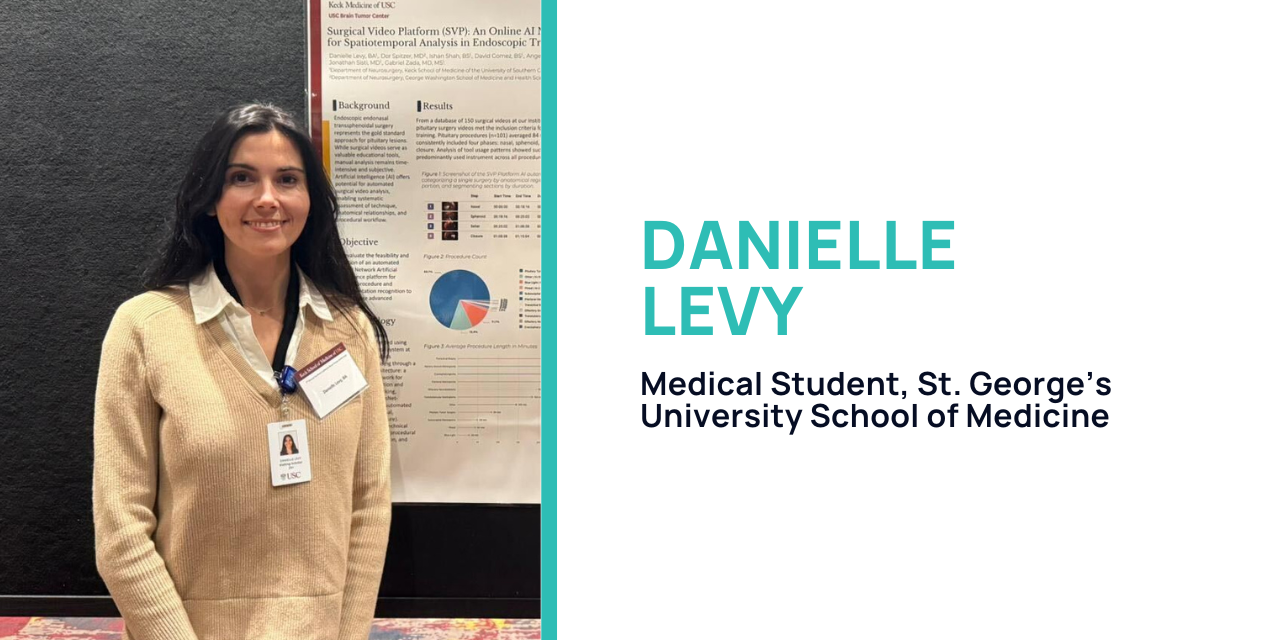
Danielle Levy, a medical student and aspiring neurosurgeon at St. George’s University School of Medicine, partnered with SDSC to produce our very first student-led project on Surgical Video Platform (SVP).
Between her third and fourth years of medical school, Danielle worked under the mentorship of neurosurgeons Dr. Gabriel Zada and Dr. Jonathan Sisti at the Keck School of Medicine at the University of Southern California (USC) to collect and upload 150 videos of transsphenoidal pituitary surgeries. Captured using the Zada Endoscope and Microscope, this footage supplied data for the artificial intelligence (AI) models on SVP, as well as establishing a growing archive of videos and analyses of Dr. Zada’s cases.
“The use of AI as an educational tool has a ton of potential and I was eager to get involved in any way that I could!” Danielle shared. “I’ve always gravitated towards anatomy, and watching surgical cases was a great way to learn. It helped me gain surgical knowledge in addition to project experience outside of my usual scope.”
Of the videos collected, 70 met the inclusion criteria for AI training. SVP then analyzed them using a dual-network architecture: a YOLOv8 neural network for instrument recognition and tool tracking, and a ResNet-MSTCNN++ model for automatic phase detection (nasal, sphenoid, sellar, and closure). The resulting metrics provided quantitative insights into procedural duration, tool utilization, and phase transitions.
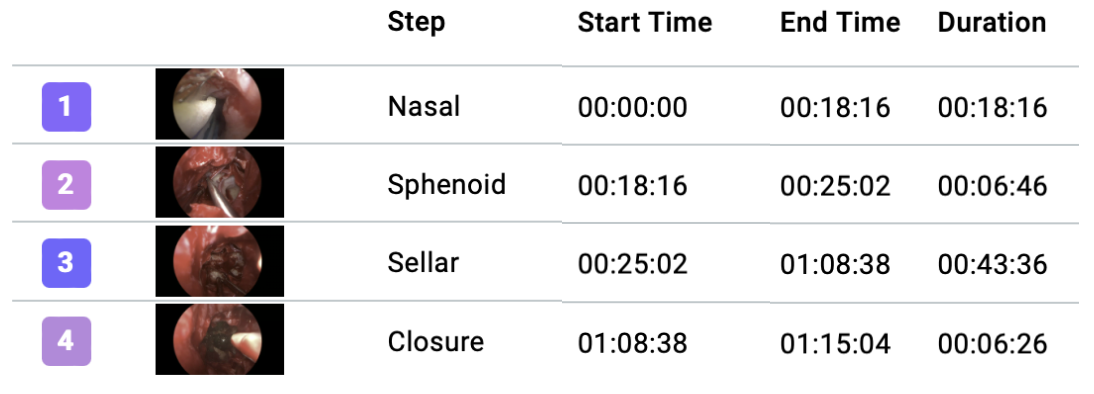
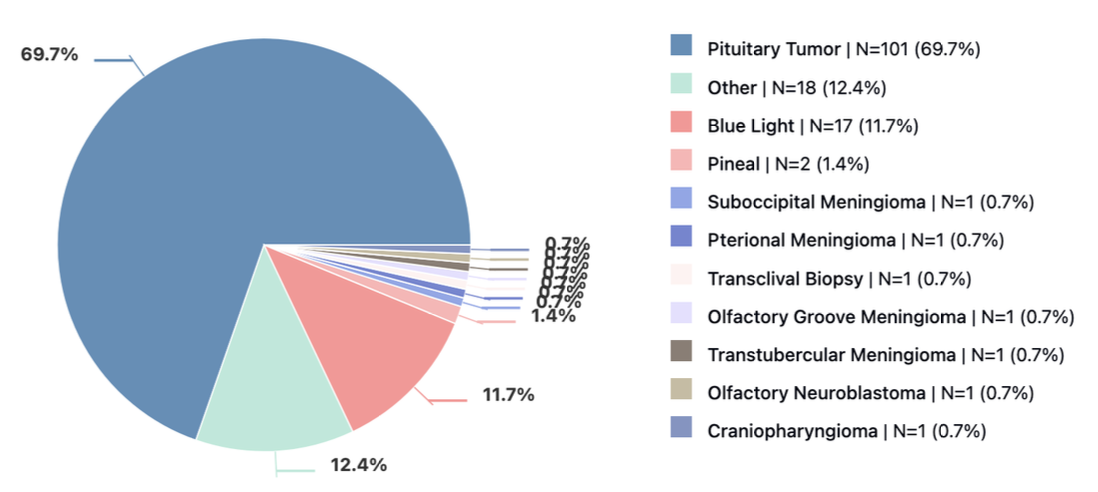
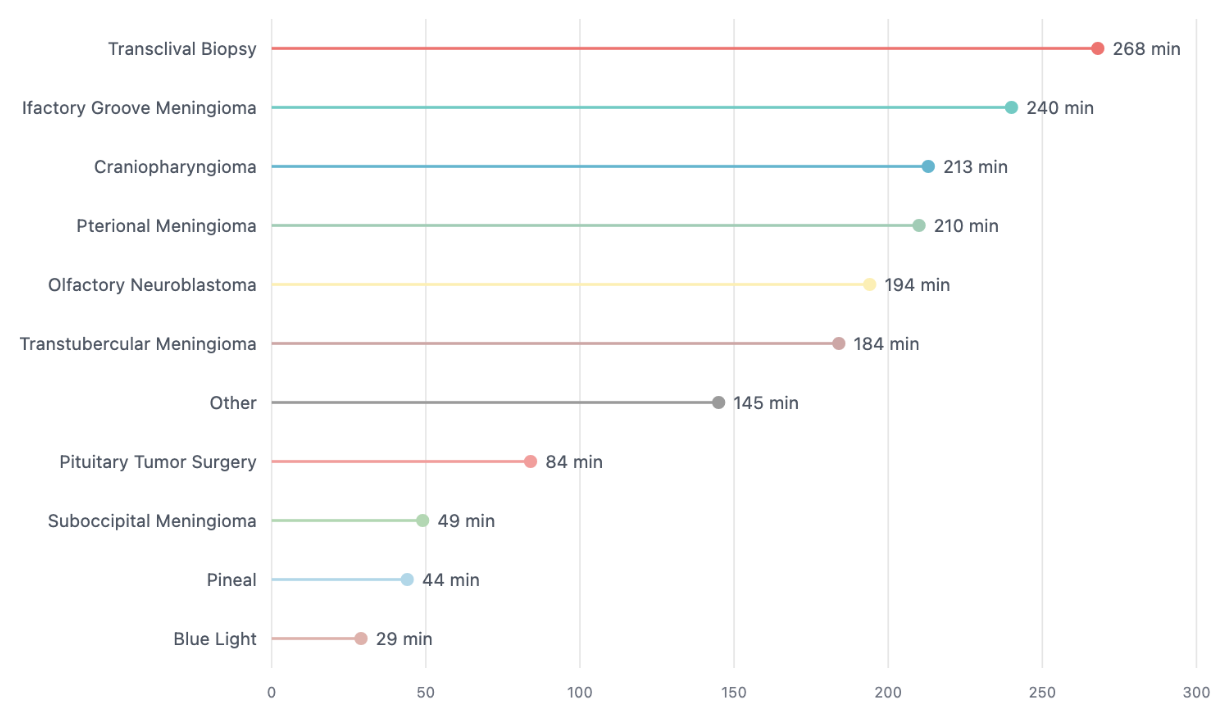
These outcomes demonstrate that SDSC’s AI can meaningfully break down complex surgical workflows to provide structured insights into how procedures unfold. These insights are invaluable to medical students, and invaluable for the continuous improvement of SVP.
“I think the project is fantastic and believe that any platform that supports students watching actual surgical videos will help further the field. Students will be able to improve their understanding of what neurosurgery looks like and study relevant anatomy which is often missed out on. It’s a great learning alternative, as there is limited cadaver availability and getting shadowing opportunities in the operating room is difficult enough.”- Danielle Levy
Looking ahead, the possibilities for expanding SVP’s capabilities are incredibly exciting. With this project’s foundation built on pituitary surgeries, her next step is to broaden the dataset to include a wider range of neurosurgical procedures. This will allow SDSC’s AI models to learn from more complex and variable cases.
Real-time tool tracking and phase recognition could eventually offer intraoperative guidance, and developing objective metrics for surgical technique assessment and standardization could transform how we evaluate performance in training and practice. Finally, incorporating anatomical landmark detection would help surgeons enhance their spatial awareness during procedures.
Most importantly, this project reaffirmed Danielle’s commitment to neurosurgery as a career.
“Neurosurgery is a dream for me. I truly have a reverence for the specialty, and I can’t imagine doing anything else. I genuinely enjoyed having the opportunity to learn from surgical videos and shadow cases.”
Danielle’s experience is proof that medical students don’t need to wait for residency to start shaping the future of surgery.
Platforms like SVP offer a way in – an invitation to contribute, learn, and explore. With her effort, SVP has a growing library of pituitary surgery analyzed for duration, tool use, and workflow structure. “The main videos of interest are transsphenoidal pituitary surgeries, but I have been uploading everything because we are also building a surgical video library of all of Dr. Zada’s cases.” This leaves her with an invaluable resource for continued learning, and a dataset that helps to build predictive models for more complex cases.
When asked about AI’s place in medical school, she said “My experience thus far is mainly with surgical videos, and I am eager to see the development of AI in this realm. Watching surgical videos with AI as a tool to analyze and describe the videos would be super helpful to all medical students.”
At SDSC, we’re thrilled to see how Danielle took the routine task of uploading surgical footage and turned it into a meaningful research contribution. Her work demonstrates that medical students early in their career have so much to offer in the evolving space of surgical data science.
Are you a medical student curious about surgery, AI, or both? SVP is your gateway to exploring the future of surgical education. While we don’t currently offer direct research projects for students, there are other impactful ways to get involved. You can connect us with residents, surgeons, and principal investigators at your institution and help coordinate contributions of surgical videos and research activities based on them.
Whether you’re looking to build connections, contribute to innovation, or gain exposure to surgical data and AI workflows – there’s a place for you here.
Danielle Levy1, Dor Spitzer3, Ishan Shah1, David Gomez1, Angela Tahg Tan1, Daniel Donoho, MD2,3, Jonathan Sisti, MD1, Gabriel Zada, MD1
1Department of Neurosurgery, Keck School of Medicine of the University of Southern California (USC), Los Angeles CA
2Department of Neurosurgery, George Washington School of Medicine and Health Sciences, Washington, D.C.
3Surgical Data Science Collective (SDSC)