The training innovation gap: what if a neurosurgeon in Africa could get feedback on their technique from artificial intelligence (AI) trained on expert surgical video recordings from leaders like Dr. Benjamin Warf? The future is already here.
The bottleneck nobody talks about
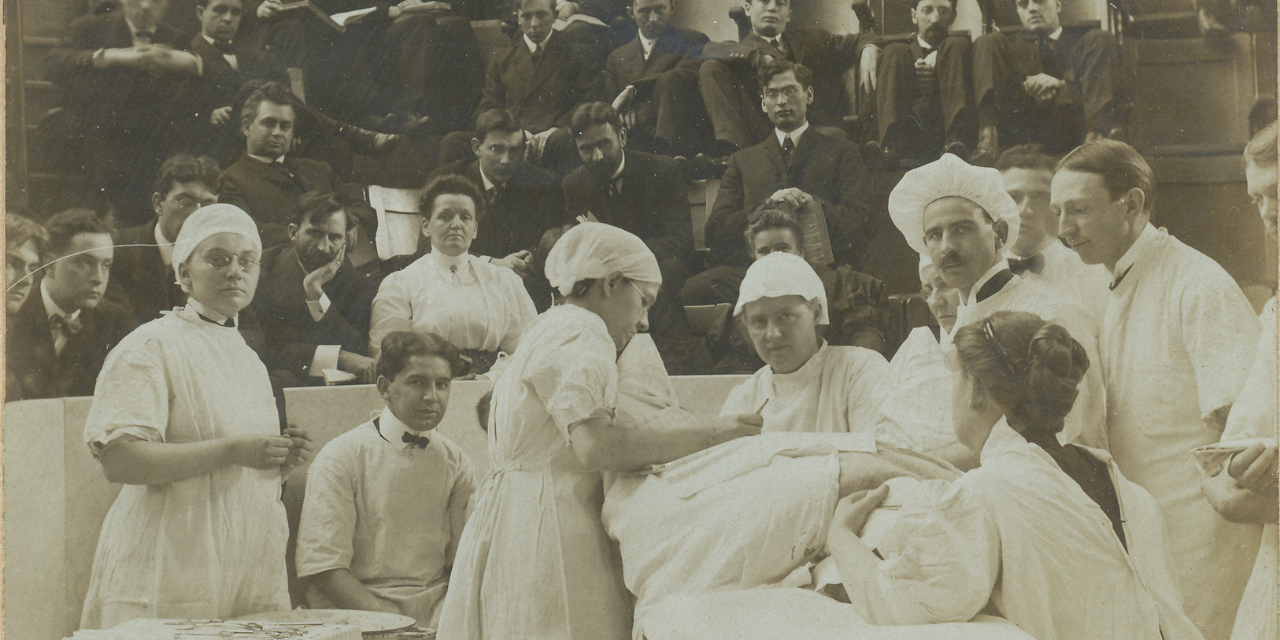
Surgical training has not fundamentally changed in 150 years.1
In our last blog, we talked about the procedures that Dr. Warf pioneered in Uganda and how his non-profit, NeuroKids, is expanding that model to other countries. The problem is that the model most surgeons are still trained under today is Halstedian: “see one, do one, teach one,”
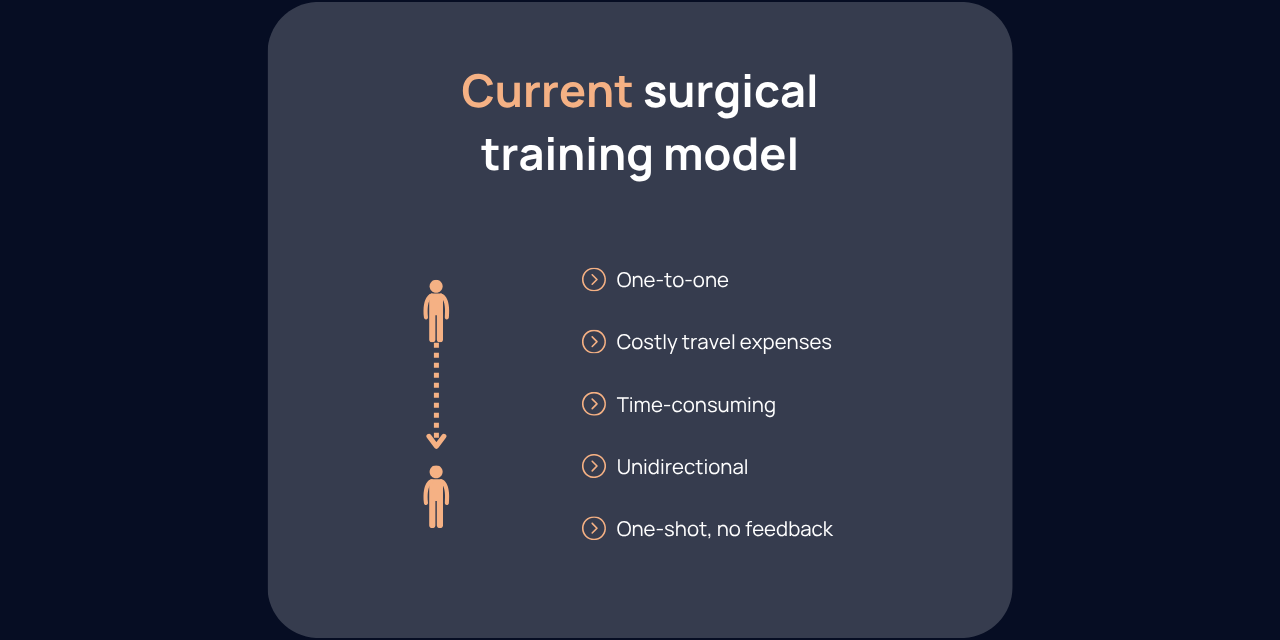
which assumes that you are in the room with an expert, and that learning happens by proximity. For most of surgical history, that assumption was reasonable enough, but for the scale of the global surgery challenge? Catastrophic. At SDSC, we wondered: was there a way to harness the power of expert teachers and expand their knowledge more rapidly using artificial intelligence?
Simply put, there are not enough experts to ‘be in the room’. In much of the world, getting in the room is prohibitive, requiring expense, travel, time away from patients, and institutional buy-in that many surgeons – especially those in the highest-burden, lowest-resource settings – simply don’t have. And when an expert retires or passes, their expertise leaves with them unless they trained enough successors in person to carry it forward.
We are left with a field where surgical knowledge is hoarded rather than shared, technique varies enormously across institutions and geographies, and until recently, there was no objective standard for what “good” looks like in a procedure like endoscopic third ventriculostomy with choroid plexus cauterization (ETV-CPC).
That is the problem Surgical Data Science Collective (SDSC) was founded to solve: what if surgical video, analyzed by machine learning (ML), could do what the expert in the room does – but at scale, asynchronously, and across any geography?
SDSC: the platform and the science
SDSC is a nonprofit / NGO founded by Dr. Daniel Donoho, a pediatric and adult neurosurgeon at Children’s National Hospital and George Washington University in the United States. His NIH-funded research considered how to apply computer vision and ML to surgical video to build performance-assessment tools.
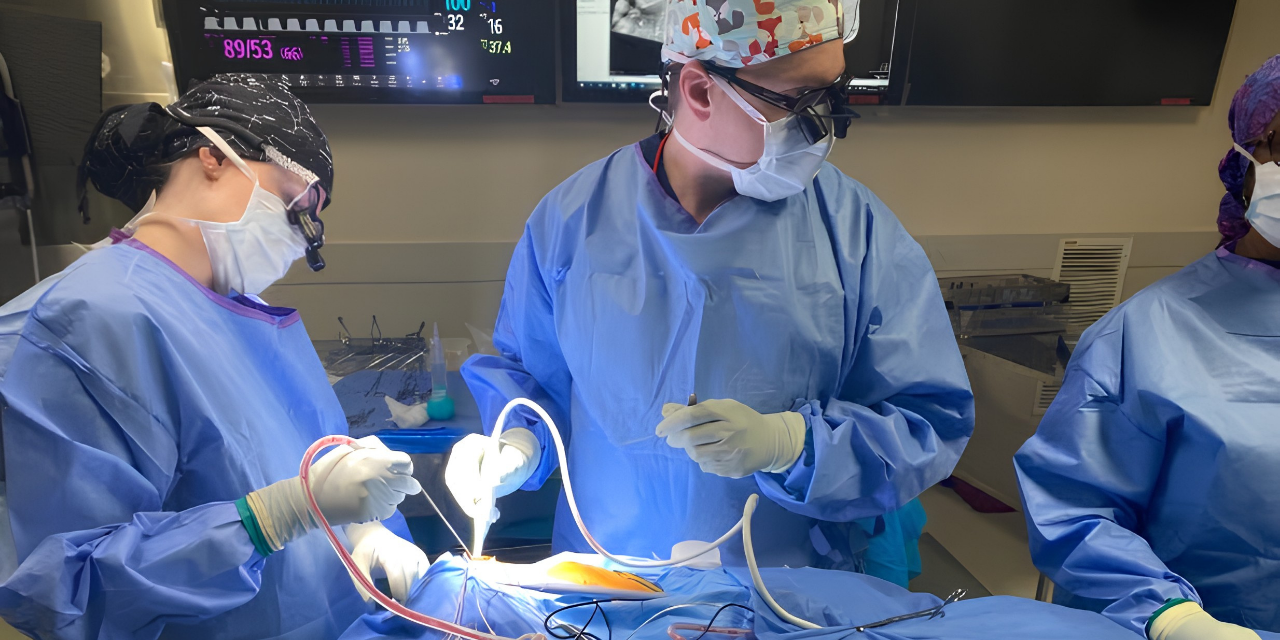
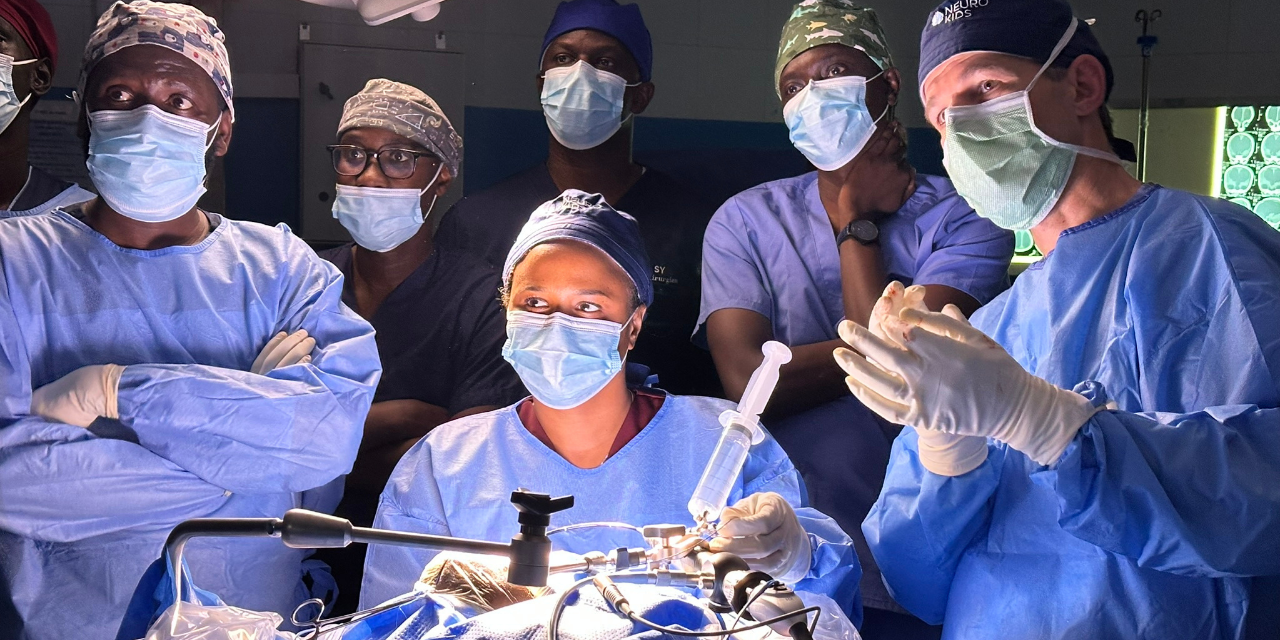
SDSC’s Surgical Video Platform (SVP) allows surgeons anywhere in the world to upload their own operative videos. ML models are trained on surgical video footage contributed by NeuroKids surgeons and other leaders in the field. These models then analyze uploaded videos to recognize surgical phases and instruments, track instrument movement, and benchmark technique against expert recordings. SDSC has developed an ETV-CPC assessment prototype that is being tested by surgeons, including the NeuroKids network, in numerous African countries. So far, more than 100 ETV-CPC procedures have been uploaded and analyzed, and NeuroKids surgeons have contributed over 50 hours of surgical video. It is important to recognize this innovation: recordings that previously sat on a shelf are being turned into insights used in active teaching efforts.
These purpose-built surgical video analysis models are better at their particular tasks than foundation models from the brand-name frontier AI leaders. Even in a world of trillion-dollar AI companies, the evidence favors SDSC’s specialized approach to model building.
How this translates in Ethiopia
One group actively testing the tool is in Ethiopia. Ethiopia represents the broader challenge in sharp relief: significant hydrocephalus burden, committed and gifted surgeons and trainees, but little access to the scale of tools, mentorship, and feedback loops enjoyed in the US and EU.
Surgeons and trainees can now upload footage of an ETV-CPC case and receive an AI-enabled analysis of their performance, including successes and areas for improvement, as well as automated feedback developed with expert surgeons’ knowledge, all without having to leave their home hospital, let alone their country.
A global hub of surgical video with AI-assisted training creates an optimal environment for multi-directional knowledge flow. Many cases in Ethiopia reflect a high burden of post-infectious hydrocephalus and limited resources, and their successes are great teaching tools both for SDSC’s models and for surgeon-trainees.2,3 In this way, Ethiopian surgical expertise reaches surgeons all around the world.
Bi-directional knowledge transfer and local experts training AI is a genuine reframing of what global surgical collaboration can be. Instead of the antiquated model assuming a one-way transfer of expertise from high-income institutions outwards, SVP provides a global, open access knowledge hub that recognizes expertise from around the world.
Let’s not forget the research dimension here too. Beyond training, SDSC and its partner surgeons globally are building a research dataset of ETV-CPC procedures performed in low-resource, high-burden settings and working together to adapt the models specifically to that context. AI analyzing a repository of data like this can help us uncover details that the human eye may miss. Details that could help find answers to open surgical questions in the field.
From one-to-one to one-to-many
Previous SDSC posts have touched on this idea, so we’ll keep this brief: we aim to shift surgical training from a one-to-one apprenticeship model to a one-to-many system. This means the global scaling of AI-analyzed surgical video, expert virtual mentorship, and networked peer learning.
Every surgeon who uploads video helps train the model, and therefore other surgeons. Every cohort of NeuroKids-trained surgeons becomes part of the expert network for the cohort that follows. This is compounding capacity, and the opposite of a system where expertise is lost every time an expert retires.
Behind the scenes, SDSC’s computer vision architecture (ResNet/ViT combined with MSTCN++) represents cutting-edge research in the field of surgical data science. Its application in low-resource surgical settings is generating real insight into AI generalizability, data diversity, and clinical validity.
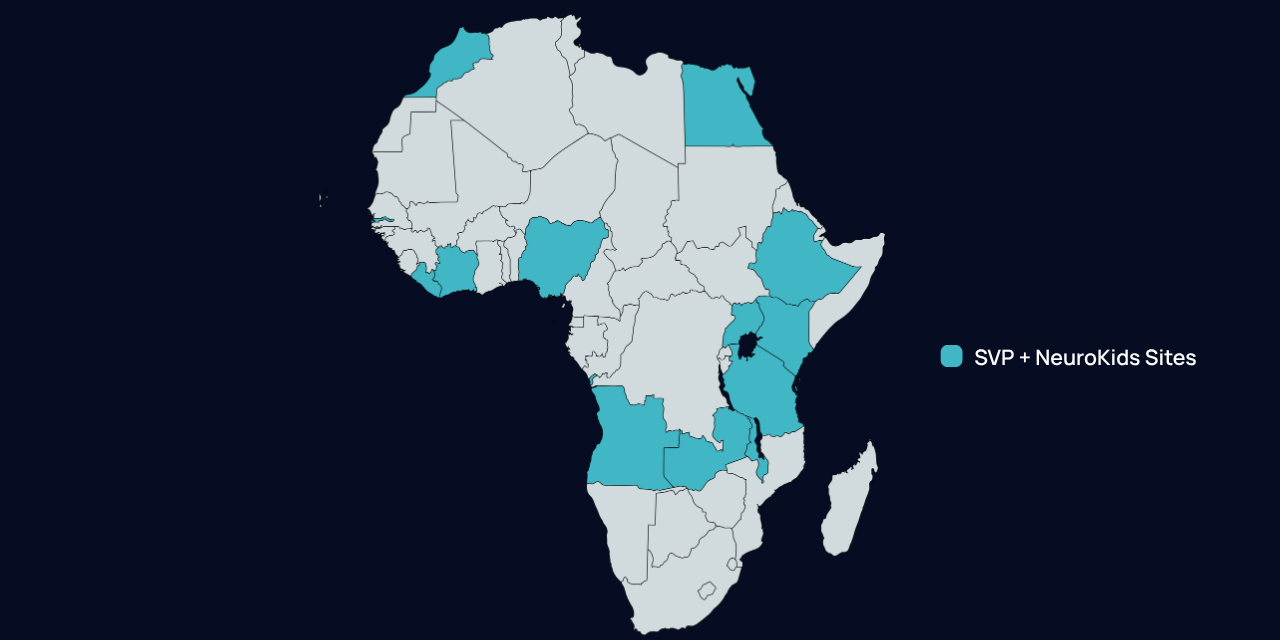
The platform is already open to our valued partners across Ethiopia, Tanzania, Egypt, and beyond, including ten NeuroKids sites. The ambition is a surgical learning ecosystem that doesn’t require a passport.
Why this is the future of global surgery
According to the Lancet’s landmark finding in 2016, postoperative death is the third-leading cause of death worldwide.4 There are few better places to invest in global health than in improving surgery.
For surgeons: there will be an objective measure and a way to get continuous feedback on your performance, even when your mentor isn’t around.
For national governments: AI-assisted training is a workforce multiplier that can save money. It allows a single trained surgeon to effectively mentor dozens of others, with AI providing the continuity and objective feedback that time and geography otherwise make impossible. This is a model governments can support with confidence.
For funders: the marginal cost of adding an AI-powered training layer to an existing training program is low. The marginal impact – in surgical quality, training throughput, and research data generated – is high. This is exactly the kind of leverage that constrained development finance needs.
For patients: confidence that your surgeon has had extensive training and can perform your procedure with confidence.
And the vision extends beyond hydrocephalus. This approach can apply to any surgical procedure where video is available and a training gap exists. Hydrocephalus is the proof of concept, the model itself is universal.
Global surgery has historically lagged behind the kind of dedicated, pooled financing that transformed outcomes in HIV, malaria, and vaccination. But the case has never been stronger: the procedures exist, the training model exists, the AI infrastructure exists, and health-system-integrated delivery models exist. What’s missing is the financing commitment needed to scale what’s already working.
What zero looks like
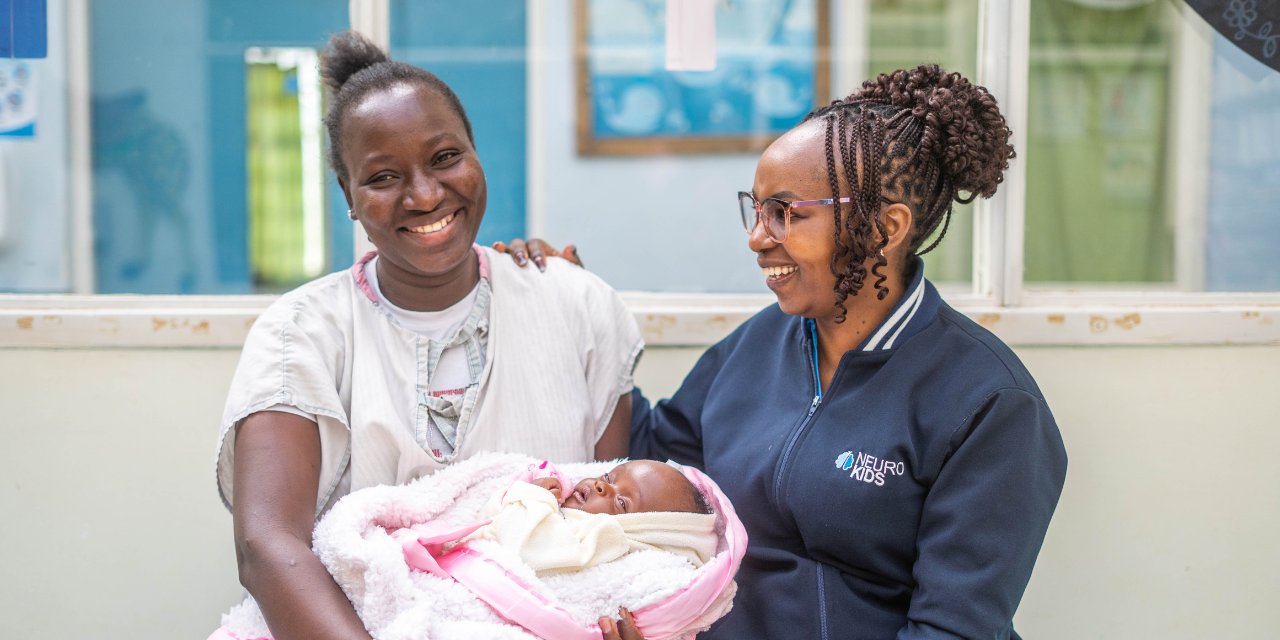
NeuroKids’ mission is to ensure that every child with hydrocephalus can access timely, high-quality care, with the goal of zero preventable deaths from a curable condition.
SDSC’s mission runs alongside it: close the global surgical divide. Getting to zero requires trained surgeons, but doing this at scale requires AI-powered learning systems. Sustaining those systems requires health-system integration and dedicated global financing.
This isn’t a utopian vision. The roadmap with the technology, the model, and the evidence are already in place. It is possible! What we need is for funders and governments to treat global surgery as global health.
SDSC is working with partners around the world to build a library of surgical video that improves surgical knowledge, research, and care. At ISPN this year, SDSC is asking surgeons to bring their surgical videos (hydrocephalus cases and others!) to support this growing library and start the conversation about how we can help them do research, train their learners, and advance the cause of safe surgery worldwide.
Connect with Surgical Data Science Collective (SDSC) and visit the NeuroKids booth at ISPN this October to learn more.
To learn more about partnering with NeuroKids or SDSC, or to explore how your institution can support the global surgical workforce, visit neurokids.org and surgicalvideo.io.
1. Kotsis SV, Chung KC. Application of the “see one, do One, teach one” concept in surgical training. Plastic and Reconstructive Surgery. 2013 May;131(5):1194–201. doi:10.1097/prs.0b013e318287a0b3. https://pmc.ncbi.nlm.nih.gov/articles/PMC4785880/
2. Asfaw ZK, Tirsit A, Barthélemy EJ, Mesfin E, Wondafrash M, Yohannes D, et al. Neurosurgery in Ethiopia: A new chapter and future prospects. World Neurosurgery. 2021 Aug;152. doi:10.1016/j.wneu.2021.05.071 https://pubmed.ncbi.nlm.nih.gov/34052452/
3. Mulugeta B, Seyoum G, Mekonnen A, Ketema E. Assessment of the prevalence and associated risk factors of pediatric hydrocephalus in diagnostic centers in Addis Ababa, Ethiopia. BMC Pediatrics. 2022 Mar 18;22(1). doi:10.1186/s12887-022-03212-6 https://pmc.ncbi.nlm.nih.gov/articles/PMC8932009/
4. Nepogodiev D, Martin J, Biccard B, Makupe A, Bhangu A, Nepogodiev D, et al. Global burden of postoperative death. The Lancet. 2019 Feb;393(10170):401. doi:10.1016/s0140-6736(18)33139-8. https://www.thelancet.com/journals/lancet/article/PIIS0140-6736(18)33139-8/fulltext